
 Almot Maqolo, Staff Writer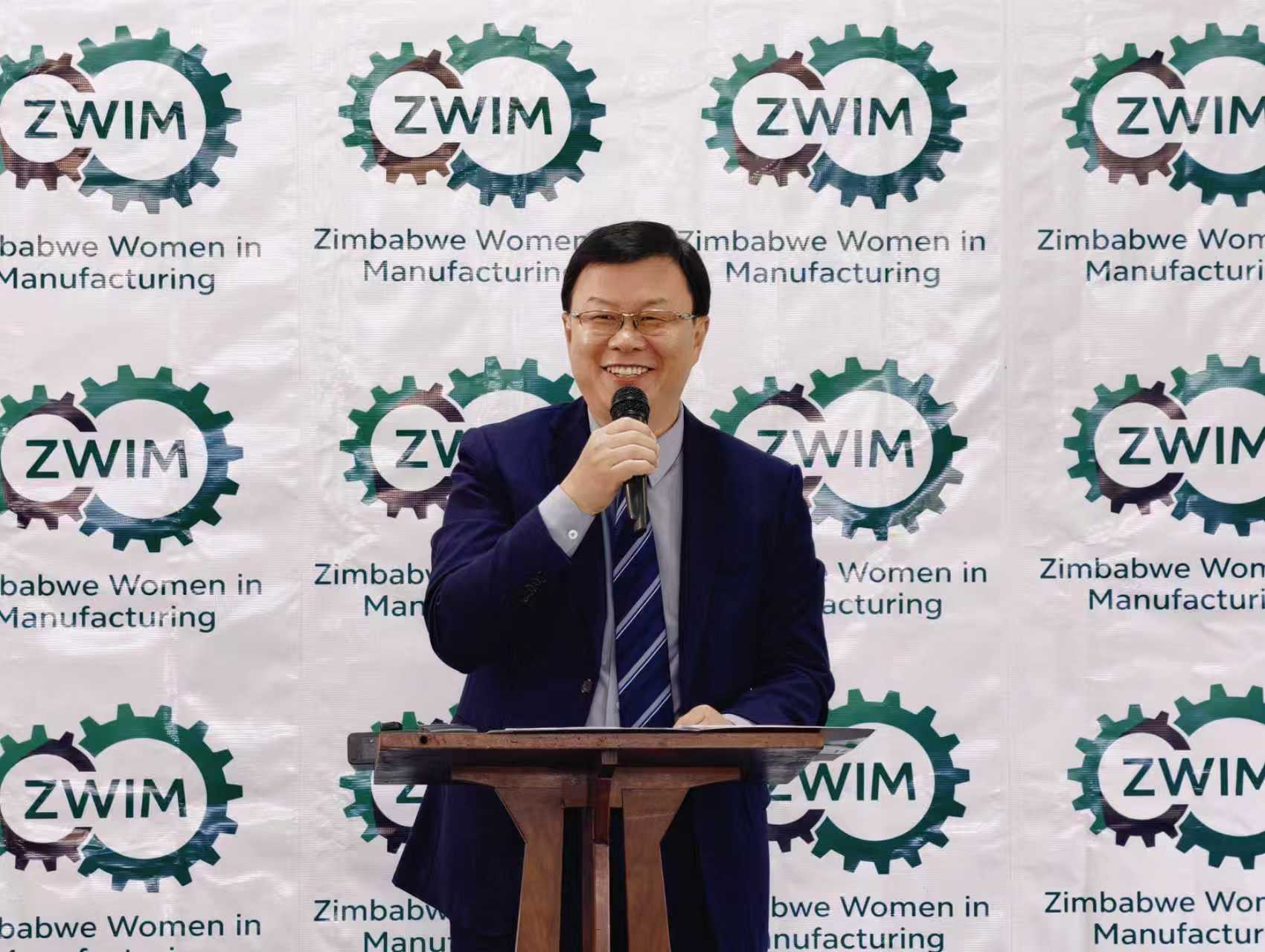
…as Zim launches women-led manufacturing association
CHINA has moved to anchor the success of Zimbabwean female industrialists, with ambassador Zhou Ding pledging targeted technical and financial cooperation to ensure women prosper.
Speaking at the launch of Zimbabwe Women in Manufacturing (ZWIM), Ding pledged support for women’s participation in industrial development.
He said the formation of ZWIM came at a crucial time as Zimbabwe pursues its Vision 2030 development agenda and seeks to expand industrialisation and value addition.
Zhou praised the organisation’s leadership and members for advancing women’s participation in manufacturing, saying female entrepreneurs were playing an increasingly important role in the country’s economic transformation.
“There is a well-known saying in China: ‘Women hold up half the sky.’ Last year, at the Global Leaders’ Meeting on Women in Beijing, Chinese President Xi Jinping reaffirmed this truth and emphasized that women’s development is a key driver of human progress,” Zhou said.
He said Zimbabwe and China shared a commitment to empowering women and promoting inclusive industrial growth, adding that women entrepreneurs were helping drive industrial upgrading and local value addition.
Zhou highlighted longstanding economic cooperation between the two countries, citing infrastructure projects, trade and investment links that he said had contributed to Zimbabwe’s development and job creation.
He said Chinese investments in sectors such as infrastructure, steel, cement, solar energy and lithium processing were helping strengthen Zimbabwe’s industrial base while creating opportunities for small and medium-sized enterprises and women entrepreneurs.
The ambassador also pointed to China’s decision to grant zero-tariff treatment to exports from all 53 African countries with diplomatic ties to Beijing, including Zimbabwe, beginning of last month.
“A transformative policy milestone put in place is that, since May 1, 2026, China has implemented its comprehensive zero-tariff treatment for all 53 African countries that have diplomatic ties with China, including Zimbabwe,” Zhou said.
“This landmark policy opens China’s vast market wider to Zimbabwean products, creating unprecedented export prospects, especially for women-led enterprises.”
Zhou said China would focus on capacity-building programmes, industrial exchanges and support for Zimbabwean manufactured exports to the Chinese market as part of efforts to deepen economic cooperation.
Deputy Minister of Women Affairs, Community, Small and Medium Enterprises Development, Kiven Mutimbanyoka, said the launch represented a significant step towards women’s economic empowerment and industrial participation.
Mutimbanyoka described the organisation as more than a business association, saying it would serve as a platform to position women at the centre of Zimbabwe’s industrialisation agenda.
“Today is more than the launch of an organisation. It marks the birth of a movement that seeks to position women at the centre of Zimbabwe’s industrialisation agenda,” he said.
The deputy minister said women accounted for about 56 percent of Zimbabwe’s small and medium enterprises sector but remained underrepresented in formal manufacturing and industrial production.
He said barriers including limited access to finance, infrastructure, technology and markets continued to constrain women-owned businesses from expanding into large-scale manufacturing and export-oriented production.
“The challenge lies in addressing barriers that continue to limit women’s participation in manufacturing, including limited access to affordable finance, industrial infrastructure, technology, machinery, markets, and strategic business networks,” Mutimbanyoka said.
He said the government remained committed to strengthening women’s participation in productive sectors through policy support, access to finance, industrial training, mentorship programmes and market opportunities.
Mutimbanyoka said ZWIM would provide a collective platform for women manufacturers to engage policymakers, financial institutions and development partners while promoting networking, technology transfer, skills development and investment.
He called on stakeholders from government, the private sector, academia and development organisations to support women-led manufacturing enterprises.
The launch comes as Zimbabwe seeks to accelerate industrialisation and achieve upper-middle-income status by 2030, with policymakers increasingly emphasising the role of women-owned businesses in driving economic growth, job creation and value addition.

