
 Mishma Chakanyuka, Staff Writer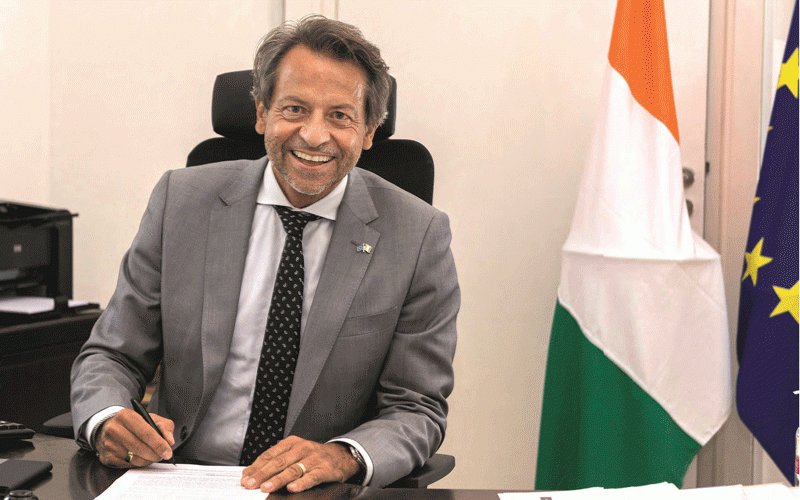
ZIMBABWE’S decision to provide land tenure security could encourage joint-venture capital inflows from foreign investors, which could increase production and agricultural sector growth, the European Union (EU) says.
This comes as a group of war veterans led by Joseph Chinguwa have launched a lawsuit to scuttle President Emmerson Mnangagwa’s plans to give title to 99 year-lease offer letter and permit holders, make them bankable, transferable and compensate ex-white commercial farmers – and in a development also aimed at “nuking” the Kuda Tagwirei-led commission’s title deeds programme, and disrupting Harare’s debt resolution crusade.
“There has also been a landmark decision on land tenure, the issuance of bankable title deeds. This can unlock… credit to farmers and significantly boost both agricultural exports, and food self-sufficiency,” EU Ambassador to Zimbabwe, Jobst von Kirchmann, said at the ongoing EU-Zimbabwe Business Forum.
“…this decision has already sparked increased interest in joint ventures with foreign investors who (can) bring capital that local banks cannot yet provide,” he said.
Kirchmann stressed the importance of the private sector in spurring economic development and inclusive job creation for both Europe and Zimbabwe. He implored the EU and Zimbabwean private sector to create synergies for opportunities and navigate challenges when investing or trading in Zimbabwe.
“We are not the one doing joint ventures. And we are not the one investing our own money. It’s the private sector. It’s you. So, you are the engine for inclusive job creation in sustainable growth,” Kirchmann said. “And this is… why the private sector is at the heart of the Global Gateway Initiative. It’s the driving force. The EU doesn’t do the deals. You do the deals.” Kirchmann further noted that the main aim of the forum was to give the private sector an accurate picture of where Zimbabwe stands. “No investment is risky.
When companies make decisions, they actually weigh the potential return against the risks. They are not seeking zero risk, and I’m sure you would all agree with me, but they look for predictability. They want to know what they are getting themselves into, and they want to know whether they can manage that risk,” he added.
According to Kirchmann, trade and investment between the EU and Zimbabwe could hit the US$1 billion mark in the next few years.

