 Staff Writer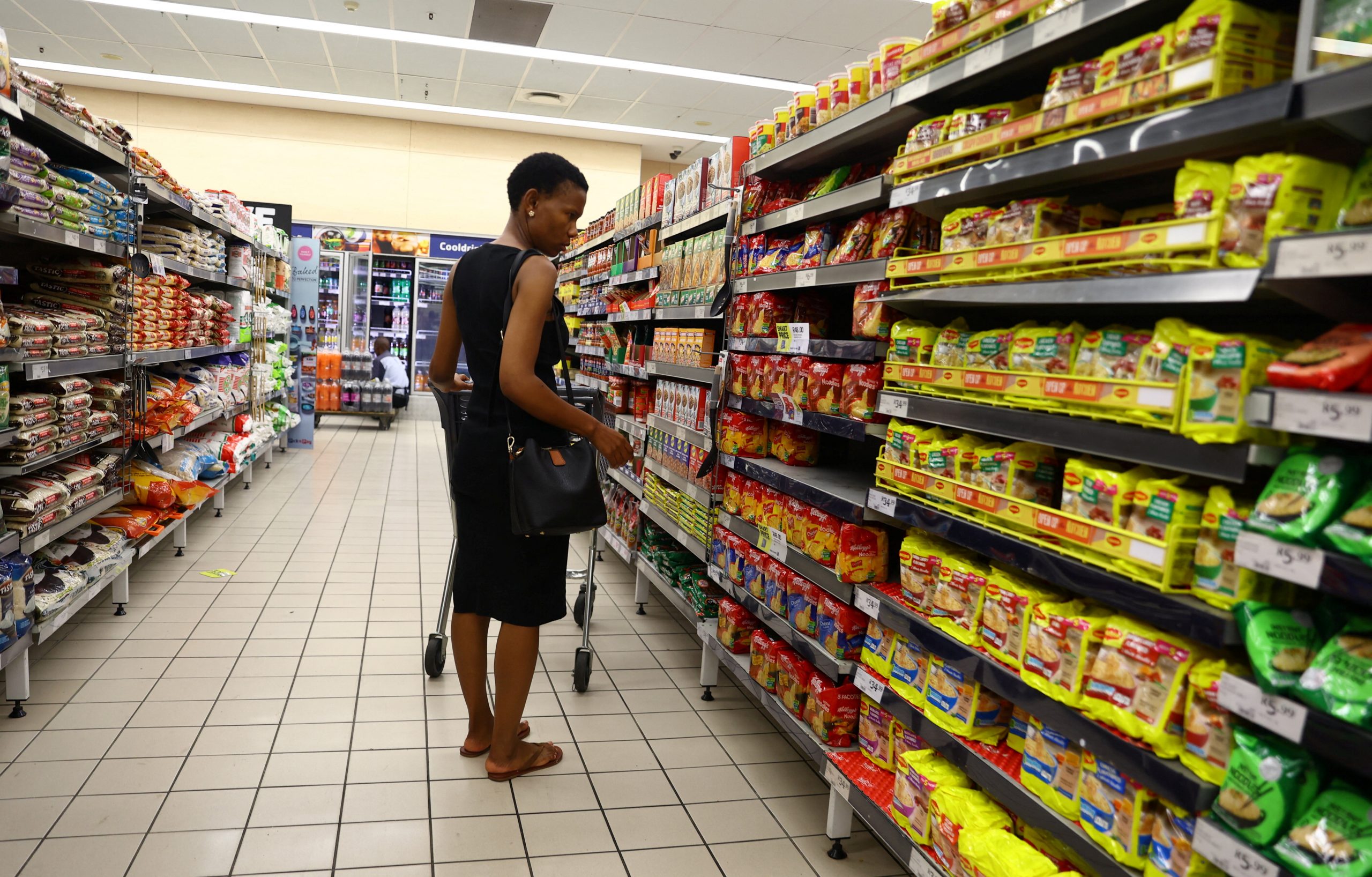
South Africa’s persistently low growth rate is increasingly being treated as the new normal, while the country struggles with a vacuum in political leadership and weak investor confidence.
This concern was raised by speakers at the Money Summit 2025, held in Sandton, Johannesburg on Tuesday.
The comments coincided with the release of South Africa’s second-quarter GDP data, which reflected a rebound to 0.8%, up from just 0.1% in the first quarter.
Infrastructure scores a ‘D’
In a keynote speech on South Africa’s economic trajectory and what it means for business and investors, Ndivhuho Netshitenzhe, senior economist at Stanlib, said the underlying driver of South Africa’s growth is not the industrial sector, such as mining or manufacturing, but retail.
“South Africans don’t know how to save, but we do know how to shop.”
Netshitenzhe noted that retail growth was concentrated in discretionary items such as shoes and clothing, rather than in home-improvement sectors that typically support productive investment.
Infrastructure, meanwhile, is deteriorating. According to the Institute of Civil Engineering’s infrastructure scorecard, South Africa scores a “D” overall and is heading for an “E”. Rail and water are already at “E” level, she said.
The problem, she argued, lies in years of declining fixed investment. South Africa’s target for fixed capital formation is 30% of GDP, but by 2024 it was just 15%. Netshitenzhe said the state would need to invest more than R1 trillion merely to return to 2019 levels of fixed capital formation, and around R2 trillion to reach historical peaks.
“But South Africa doesn’t have the money,” she said. Interest payments on South Africa’s debt – projected to peak at 75.5% of GDP – are “cannibalising other investments.”
The private sector, by contrast, has one of the lowest corporate debt burdens among emerging markets. Yet companies remain unwilling to deploy cash because of low business confidence.
“Doing business in South Africa is harder, with more stringent regulation than China,” she said.
“There is a significant amount of red tape businesses have to jump through to expand, and so it’s harder and harder to release money.”
‘Stage 3 cancer’
In a session on debt and spending inefficiencies, Pan-African Investment and Research Services founder Dr Iraj Abedian used a stark metaphor – if South Africa were a human body, it would have stage 3 cancer.
He stressed that fiscal policy cannot be isolated from politics, growth, capital markets, and citizens’ expectations. “When you have fiscal problems, you have growth problems, and poor leadership exacerbates it. On the other hand, if growth keeps pumping, people become less dependent on the fiscus.”
Abedian argued that government borrowing has yielded little value.
“If you borrow and you don’t make sure the return is higher than the rate at which you borrow, you’re heading for the cliff. Are we borrowing to deliver value? If not, stop borrowing.”
He added that government and business leaders have effectively “socialised” a low-growth equilibrium, treating it as acceptable.
“If South Africa had an economy that was unable to generate more than 2%, then one could have expected it. But this country has demonstrated that in the 2000s it managed growth rates near 5%.
Read: SA’s low growth leaves citizens poorer than global average, Investec says
Efficient Group economist Dawie Roodt said that if local government and state-owned enterprise liabilities are included, South Africa’s debt burden is closer to 90% of GDP.
He echoed Abedian’s concern that low growth has been normalised, with a president and a cabinet that budget for low growth. “It’s basically a motion of no confidence in your own policies.”
‘Supply-side blockages impede growth’
During a question-and-answer session after his keynote address, Deputy Finance Minister David Masondo told Moneyweb editor Ryk van Niekerk that “supply-side constraints, including electricity, telecommunications, and crime,” have been a drag on the economy.
Van Niekerk pointed out that South Africa’s economy last grew by more than 2% in 2013. “It’s 15 years later, and the projections are under 2%.”
Read: Masondo says current inflation target is too broad
Masondo said the government’s structural reforms under Operation Vulindlela were designed to address these structural failures but conceded that the state alone could not carry the burden.
“State failure has necessitated the market to come in and play a significant role in helping to fix the supply-side constraints. So we don’t only rely on the SOEs to get our economy growing,” conceded Masondo.
Van Niekerk pointed out that policy uncertainty weighs on investor confidence. “Whenever a bill is presented in parliament, there are surprises. If you invest for the long term, you don’t want surprises in legislation.”
Empowerment
His concerns about shifting legislation fed into a broader discussion about the policy environment and its effect on investment. Questions turned to whether existing empowerment laws, in particular, might discourage investment – such as delaying South African-born entrepreneur Elon Musk’s entry into South Africa.
Masondo defended the empowerment laws, saying it was important not to appear to be “defending colonially accumulated privileges.”
“It’s in the interest of our economy to undertake empowerment. And if there are shortcomings, let’s have a conversation about that. But we can’t just take a position and say empowerment is wrong.”
Van Niekerk asked Masondo if he has undertaken research to determine what impact empowerment has had on economic growth and job creation.
Read:
South Africa pushes rule review that would ease Starlink entry
Blow for state over BEE requirement for estate agents
Masondo responded: “No, I haven’t. When you’re in public office, you don’t have time for research. The research is done by people and then given to you.”
He added that he was “open to rethinking” elements of the ownership empowerment regime.
“One of the measures should be broad employment, and this is the scorecard on how to measure it. But I’m jittery when people want to throw the baby out with the bathwater.”
Political leadership vacuum
In a session moderated by Moneyweb at Midday presenter Jeremy Maggs, the Rivonia Circle’s Lukhona Mnguni and Prof Adrian Saville from the Gordon Institute of Business Science agreed that the quality of South Africa’s political leadership is deteriorating.
Mnguni said the 2029 national elections were “far away” and, in the meantime, there was “a huge vacuum at leadership level. The centre is not holding, and it doesn’t seem like there’s any urgency to turn things around.” – bbc.com

