
 Staff Writer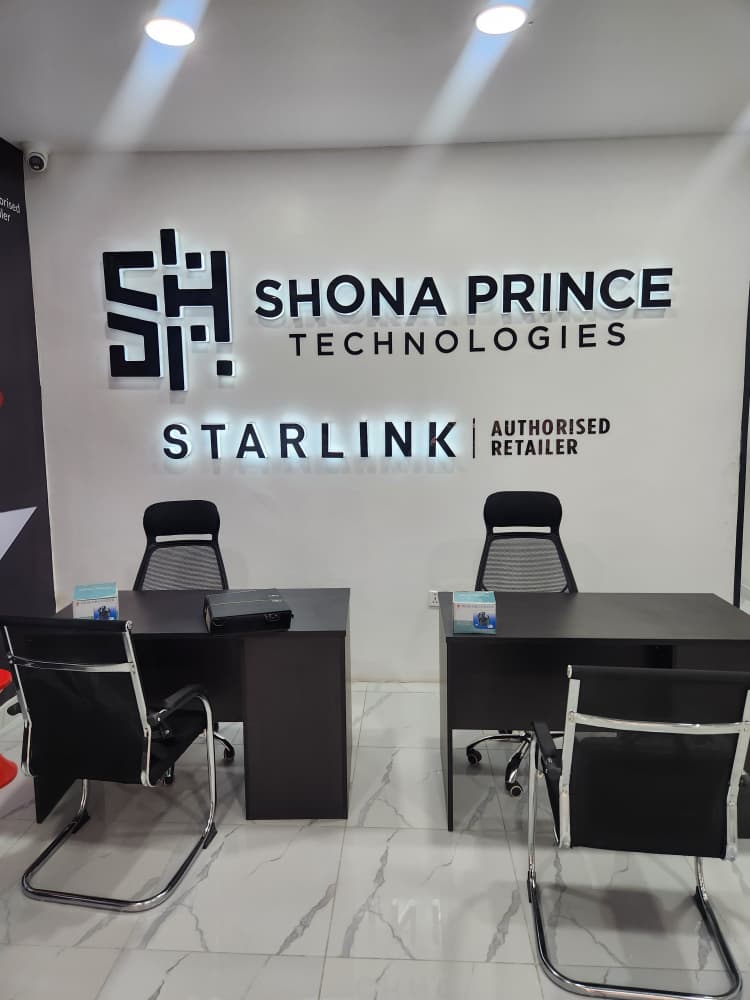
BY BEAVEN DHLIWAYO
WHEN Victor Mapunga founded Shona Prince Technologies, he was only 25 years old and already imagining a future where millions of Africans could access the internet affordably.
Two years later, at just 27, he has become the face of Starlink’s expansion in Africa, leading one of the most ambitious connectivity rollouts the continent has ever seen.
Mapunga is today the only authorised Starlink retailer in Zimbabwe, with his company also holding licenses in Mozambique, Lesotho, Zambia, and Rwanda.

This five-country footprint places Shona Prince among the continent’s most influential Starlink distributors, and one of the fastest growing companies in Zimbabwe’s history.
“Our goal is simple but bold,” Mapunga told The Financial Gazette.
“We want to connect one million African homes in the next three to five years.
For us, internet access is not a luxury—it’s a foundation for education, commerce, and even basic dignity.”
Demand Surging Beyond the Capital
Contrary to expectations, the company has discovered that demand is highest not only in Harare, where fibre networks exist, but in towns like Mutoko, Victoria Falls, and farming communities where Starlink is often the first high-speed internet option ever available.

“We were surprised at first,” Mapunga said.
“But it shows that rural Zimbabweans and small towns are hungry for connectivity—they’ve just never had the option before.”
To meet this demand, Shona Prince has opened branches across Zimbabwe, including outlets in Harare, Mutare, Masvingo, Gweru, Victoria Falls, Bindura and Bulawayo. The Avondale hub in Harare remains the flagship, but Mapunga insists that the real story is in underserved communities.
A Hybrid Model for Africa
While Starlink itself sells directly to customers online, Shona Prince fills a critical gap: hardware distribution, local financing, and technical support. For many Zimbabweans without international cards or trust in digital-only platforms, this physical presence is vital.
“When people can walk into our shops, it builds confidence,” Mapunga explained.
“They know they can get face-to-face support, not just an email from abroad.”
Unlike commercial resellers who manage billing and support entirely, Shona Prince’s authorised retailer model focuses on hardware distribution. This approach enables rapid regional expansion while keeping overheads manageable.
Still, Mapunga is building beyond kit sales.
“Yes, our revenues are front-loaded today,” he said.
“But we’re building an ecosystem: local financing options, community agents, and eventually subscription-based services designed specifically for African realities.”
Roots in Blockchain and First Principles
Before Shona Prince, Mapunga co-founded FlexID, a blockchain-based digital identity startup. That experience, he says, still informs his philosophy.
“In Africa, you can’t just import Silicon Valley models,” he said.
“You have to design for the informal economy, patchy infrastructure, and regulatory uncertainty. FlexID taught me to build from first principles.”
That ethos now drives Shona Prince’s broader vision: integrating identity, connectivity, and service delivery as the three pillars of Africa’s digital economy.
Connectivity as Social Infrastructure
Beyond business, Mapunga is quick to stress social impact. For him, internet is infrastructure on par with roads or electricity.
“When a rural school connects to Starlink, you don’t just give them Wi-Fi—you give them access to the world’s knowledge,” he said.
“When a farmer checks weather updates or a trader sells across borders, livelihoods are transformed. That’s the scale of impact we’re chasing.”
The Reluctant Hero
Despite his rapid rise, and having built a multimillion dollar empire in less than 24 months, Mapunga resists being painted as a lone visionary.
“I don’t believe in the founder-as-saviour story,” he said.
“Leadership means creating systems that can outlast me. If Shona Prince only succeeds because of Victor, then we’ve failed.”
Asked how he wants to be remembered, the 27-year-old pauses.
“If ten years from now a kid in rural Zimbabwe can code, learn, or trade globally because we connected their home—that will be enough.”
One Home at a Time
For Mapunga, the journey of Shona Prince is not just about gadgets and satellites but about Africans building their own digital future.
“We want history to say Africa didn’t wait to be saved,” he said.
“We built the future ourselves, one connected home at a time.”

