
 Staff Writer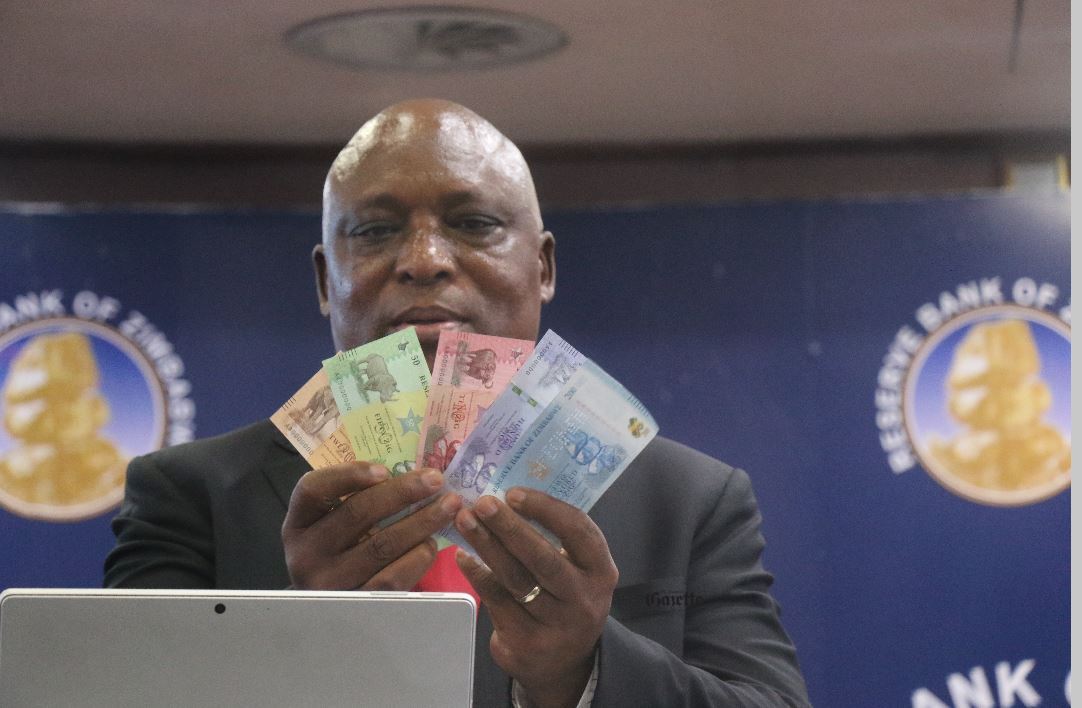
ZIMBABWE’S dollarisation remains visible in pricing behaviour, corporate reporting, and the everyday choices of households.
What is more troubling, however, is not merely the persistence of the US dollar but the absence of a credible, clearly articulated path away from it.
The central bank’s shift from a firm 2030 deadline to a more elastic, conditions-based approach may be presented as pragmatism, but in reality, it risks signalling uncertainty.
When timelines become fluid and benchmarks indistinct, markets do not interpret flexibility as wisdom, they read it as uncertainty.

And this, in a currency context, feeds precisely to the lack of confidence policymakers claim to be addressing.
Across the economy, the evidence is difficult to ignore. The dominance of foreign currency in transactions, savings preferences, and asset pricing reflects a deeply entrenched behavioural norm.
This is a trust deficit forged over years of currency instability. The introduction of new ZiG banknotes, while operationally important, does little to resolve that underlying issue.
The central question, then, is not whether de-dollarisation is desirable, but whether it is realistically achievable under current conditions. A strategy built on “meeting the right fundamentals” is sound in theory.
Yet without specificity, clear thresholds on reserves, inflation durability, fiscal discipline, and, crucially, the informal sector’s footprint, it remains an abstract ambition rather than a roadmap.
Indeed, the informal economy continues to set the tone for currency usage, often beyond the effective reach of formal monetary policy.
In such an environment, pronouncements from authorities carry limited weight unless they are matched by structural reforms that tangibly shift incentives. Without that alignment, the market will continue to default to what it trusts.
There is also a credibility gap in communication. Reassurances of stability coexist uneasily with visible dollarisation trends. When policy messaging diverges from lived economic reality, confidence erodes further. A currency, after all, is not imposed, it is chosen.
Zimbabwe thus finds itself in a delicate equilibrium. Officially committed to strengthening its local currency, yet functionally reliant on the US dollar. This duality may be sustainable in the short term, but it complicates long-term planning and investment.
Until authorities present a transparent, measurable, and time-bound pathway, one that convincingly addresses both structural weaknesses and public confidence, the prospect of de-dollarisation will remain more rhetorical than real.

