
 Tendai Kamhungira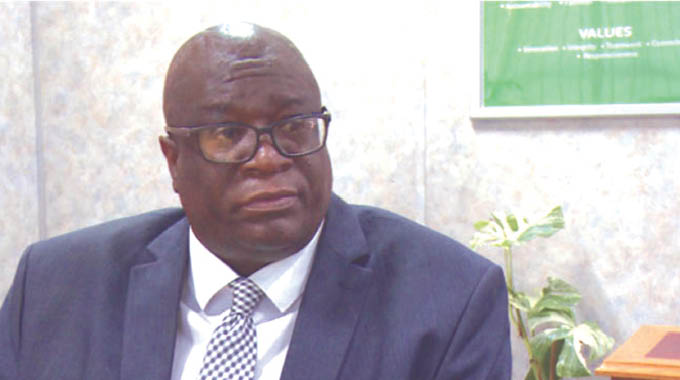
ZIMBABWE Energy Regulatory Authority (Zera) chief executive officer Edington Mazambani says the country is transitioning toward electricity self-sufficiency.
Speaking to The Financial Gazette Deputy Editor Tendai Kamhungira on the widely followed news and current affairs programme, Vantage, on leading independent national commercial television station, 3Ktv, last Thursday, Mazambani said improved power generation at Hwange and Kariba had ended loadshedding.
Below are the excerpts of the interview.
Q: For the benefit of those members of the general populace who may not know about you, what is Zera’s mandate?
A: Zera is a statutory body which was created by an Act of Parliament, the Energy Regulatory Act … It came into being in 2012 through the recruitment of executives and the staffing of the organisation. The mandate of the organisation is to superintend or regulate the entire energy sector. That includes your liquid fuels, LPG, and electricity.
Our mandate is derived from the enabling Act, which is the Energy Regulatory Act, as read together with the Electricity Act to regulate the electricity subsector and the Petroleum Act to regulate the petroleum subsector, along with subsequent statutory instruments issued to operationalise the regulation of this sector.
Our mandate covers the licensing and pricing of energy products and services. We look at the quality of service and products. We look at protecting the environment and market reform. We also act as an advisor to the minister of Energy and Power Development and the government in general.
Q: Now let’s look at the current energy situation in the country. How is Zera harnessing the positives while at the same time addressing any challenges that are facing the sector?
A: We are very much alive to the developments in the energy sector. I will give a typical example of the developments in the fuel sector recently. If we had not been proactive, we would have faced challenges like those other countries encountered where supplies were curtailed.
We tried to respond to market forces in consultation with the government. We worked together with the fuel industry sector, for example, to ensure that supplies are adequate and at appropriate levels through price adjustments, but at the same time, we also cushioned the consumers from the full impact of those adjustments.
Q: Previously, Zera indicated that it would conduct a nationwide survey on residential rooftop solar systems to quantify the country’s growing reliance on alternative power sources. Are there any updates on the survey?
A: I think this question also provides us with a platform to demystify what people thought was Zera’s intent in conducting this survey. We hear people talking about the electrification rate for the country, and we strongly feel that the intervention of rooftop solar, particularly in rural areas, is not being captured.
The intention of this survey is to capture that electrification which is not currently being recognised. We have already identified a supplier to work with in terms of conducting the survey, and we should be going out within the next month or two to do fieldwork to collect data regarding the level of penetration of rooftop solar in rural communities.
We are also going to touch on urban settlements because there is additional generation coming from rooftop solar in urban areas, which are then connected to the grid through what we call net-metering.
Q: In terms of that aspect of net-metering, what is the impact of rooftop solar vis-à-vis the demand for electricity in the country?
A: I think at the end of 2025, we were at about 75 megawatts of rooftop solar which is net-metered to the grid. It is a significant investment which has been done in a proper manner, and it also helps to stabilise our grid as generation is being done where consumption is happening.
Even if you are contributing to the grid, your net-metered capacity will also be consumed within the locality. It helps to stabilise the grid and reduce the grid losses which are occasioned by long transmission distances.
Q: So, is this coming from companies or independent power producers?
A: It is mainly companies, commercial and industrial installations, and domestic users. Actually, domestic users are also playing a significant part in this regard.
Q: Coming to the current energy mix in terms of renewables and fossil fuels, what is the ratio between these two?
A: We have about 41 percent coming from renewables, including large hydro, of which about 33.5 percent is coming from large hydro and 7.5 percent is coming from small hydro and solar installations, and 59 percent coming from thermal.
Q: What are some of the measures that Zera is taking to promote the issue of renewable energy before we talk about the electricity situation in the country?
A: With regards to renewable energy, there is a policy which was approved by the government. That policy has clear incentives, and we are currently implementing them. The first one involves tax holidays.
For the first five years, renewable energy projects do not pay any taxes, and thereafter, instead of the 25 percent corporate tax prevailing in the country, they are taxed at 15 percent. Then there is also a Value Added Tax (VAT) deferment for five years.
When you are doing the project, for the next five years, all VAT payable—be it for equipment or any other taxable goods and services—is deferred so that you can then start paying for the VAT when you are generating income.
There is also an exemption from duty for equipment in the renewable energy space and the issue of the Government Implementation Support Agreement, which is meant to de-risk these projects to make them viable and risk-free for would-be investors.
These are the initiatives being done. There is also a recent initiative by the government for ease of doing business. This is applicable to all technologies, but for projects of 10MW and below, there are no licence fees payable.
For renewable energy projects in particular, they also have a reduced licensing fee framework for capacities above 10MW.
Q: Since the beginning of the implementation of these incentives, what has been the uptake of these projects?
A: I think we have seen quite a number of projects in both renewable and non-renewable energy being implemented.
The implementation aspect for electricity sub-sector projects has been a challenge, but I am happy to say we have a solar power plant in the Midlands which has since been commissioned, and they have come back to the regulator to apply for additional capacity.
It was at 10MW, and now we have an additional 100MW to make it 110MW. We have a project being done through the Government Support Implementation Agreement by a British company just outside Gweru in Vungu for about 30MW.
So, we are starting to see traction with projects actually being implemented instead of projects just being licensed with nothing happening on the ground.
Q: What are the current electricity access statistics in the country?
A: It is a very fluid number depending on who is talking about it, but officially we say the electrification rate for the country is at an average of 62 percent. I say average because we have a higher access rate of about 83 percent plus for urban areas and about 23 percent for rural areas.
So combined, we have about a 62 percent access rate. Remember, what we intend to do with the survey is to correct the access rate for rural communities. We feel that it is higher because the contribution of rooftop solar in rural communities is not being captured adequately.
We want to capture that so that we can correct the access rate. So officially it is at 62 percent, but it could actually be higher if we capture the contribution of rooftop solar in rural communities.
Q: Over the past few years, we have experienced a lot of challenges with power supply. What is the situation like in the country at the moment?
A: I think you can testify as a consumer yourself that since December 2025, we haven’t had any load curtailment in terms of load shedding. If there are any areas where there is a lack of access to electricity, it is likely due to faults rather than a lack of supply.
We do have adequate supply through a combination of internal generation capacity, which has improved because of the water situation in Kariba.
The contribution of Hwange 7 and 8 consistently gives us above 600 megawatts to the grid, and with the operation of the earlier units—Hwange units 1 to 6—we are averaging about three units at any given time, whereas we used to do only one or two.
So, internal generation is giving us good capacity. We are also an active participant in the day-ahead market within the Southern African Power Pool.
There has been a capital injection into the Zimbabwe Electricity Transmission and Distribution Company by the shareholder, Mutapa Investment Fund, to capacitate them to participate in the day-ahead market.
Also, we have other imports coming through from regional suppliers. We have adequate supplies as a country and we do not have any load shedding.
Q: Now let me draw your attention to one of the most critical issues making headlines right now: the issue of fuel. But before we talk about the cost, we want to talk about some service stations that are reported to be selling fuel in ZiG. How accurate are these reports?
A: I think Zimbabwe, as we all know, has a multicurrency regime. All currencies are acceptable as legal tender in the country.
There could be some service stations selling in local currency for their own business considerations; it is something we haven’t verified, but it could be happening in the market.
The Zimbabwe Gold currency is legal tender, just as other currencies are, but we haven’t verified the selling of fuel specifically in local currency.
Q: Given the issues happening right now in the Middle East and the continuing crisis, are there any alternatives that you are pursuing as an organisation in terms of accessing fuel—say, for example, from Angola, where the prices are a little bit cheaper than getting it from the Middle East?
A: In terms of supplies as a country and us as a regulator, we prioritise the adequacy of supply. You would have seen that when we quickly moved to adjust to market dictates, it was mainly to make sure that as a country, we have adequate supplies.
It has been reported that we do have sufficient supplies within the country, in Mozambique, and on the high seas, which are coming through to make sure that we are covered.
Without specifying, we are exploring alternative sources of fuel, but at the same time, our usual supplies have not really been directly affected by the blockade on the Strait of Hormuz.
There is some impact, but not significant enough to give us any worries. Our supply routes are open, but the biggest challenge then becomes the international pricing of the product.
But otherwise, in terms of supplies, for now, we are adequately covered.
We are pursuing other alternative supplies to make sure that we do not wait until we have a challenge.
It is an area where we, as the regulator, and other players in the sector—be it the government or private companies—are pursuing vigorously to ensure that we do not run dry as a country.
Q: Currently, where are we getting our fuel?
A: It is mainly from the Arab Gulf, which is a very broad region that includes the area where we have the conflict, but our lines of supply, as of now, remain open. We continue to receive ships in Beira which are offloading product into our pipeline system, and we do not have any challenges in that regard as of now.
Q: There is always this talk that the price of Zimbabwe’s fuel is the highest in the region, and I know you have been asked this question countless times, but we would like to know: what is your view surrounding that issue?
A: We are not the highest, but our prices are of course considered to be high. However, I think what we need to appreciate is that the procurement models used by different countries are different.
We would also want to point out the fact that the tax regimes for different countries are different because of the peculiar situations those countries find themselves in.
Zimbabwe opened up the fuel sector and we have different international traders bringing product into the country on their own accord, which then exposes us to international pricing.
Other countries have different models of procurement which are done centrally, and, therefore, prices can actually be negotiated and locked. That then becomes a source of difference in terms of pricing, but obviously, we have different economic regimes which also affect our pricing.
Q: You speak of a critical issue that was also raised by a number of analysts regarding the tax regime in the country. Some have said that we should reduce our fuel tax so that maybe it becomes more affordable. What is your position on that?
A: I think I cannot answer that question from an informed position because issues of taxes and levies are a preserve of the Ministry of Finance, Economic Development, and Investment Promotion. The reason why our taxes are at the levels they are at is a matter better addressed by the Ministry of Finance than ourselves.
Q: Meaning you cannot lobby based on advice from other experts?
A: Well, we do engage with the ministry of Finance. If we had not intervened and asked the government to reduce their taxes, the full impact of the prices caused by the crisis in the Middle East would have breached three dollars.
The government had to forego all duties and levies on diesel for us to get a price of US$2.09. We had to forego some of the levies on petrol to get the price of petrol to about US$2.28. We do engage with the government, but we also have to be alive to the fact that these taxes and levies are there for a purpose.
We can only approach the government to consider reductions when we are in a situation like we are in now, which is a crisis, but otherwise, taxes and levies are a preserve of the Ministry of Finance.
Q: A fortnight ago, we saw the prices of fuel go down by a few cents. Are we likely going to see a trend where the fuel is also going to go down further?
A: Unfortunately, we are a price taker as a country. If international prices retreat, we certainly reduce our prices because when we propose fuel prices to the government, we check the international prices. So, if the international prices retreat, certainly, yes, we will pass that benefit on to the consumers.
Q: There is the Africa Electricity Regulators peer review and learning network that is set to take place in May. Can you give us a brief insight into that program?
A: This is a programme which is being run by the University of Cape Town Power Futures Lab and I think it is being sponsored by the World Bank and the EU, if I am not mistaken. We had the first cohort which had six countries, and the current cohort where Zimbabwe is included is the second.
We also have six countries: Zimbabwe, Zambia, Mozambique, Eswatini, Egypt, and Cameroon. This is a platform where fellow CEOs interrogate and benchmark the regulatory substance of fellow regulators.
This is done to look at the governance framework of the regulators and the legislation that establishes the regulator. It also looks at the regulatory substance—the actual work being done by the regulator—and the regulatory impact.
How it is going to be done is that, when looking at governance, they talk to the policymakers, the ministry, and the board.
Then they look at the regulatory substance, examining how we are working as ZERA—what we do and the instruments we use to regulate the sector.
Then, when looking at regulatory impact, they interview the regulated entities, which are the licensees.
They look at the consumer groups and interact with the media to find out what the impact of the Zimbabwe Energy Regulatory Authority has been in the energy space in the country.
It is a welcome development where we are going to be benchmarking and comparing notes with each other.
At the end of it all, there will be a paper which will advise policymakers on the governance framework, advise us as the regulator on regulatory substance, and also come up with ways of interfacing with regulated entities and other interested stakeholders, including the media, so that we improve the regulatory impact the authorities have in the country.

