
 Staff Writer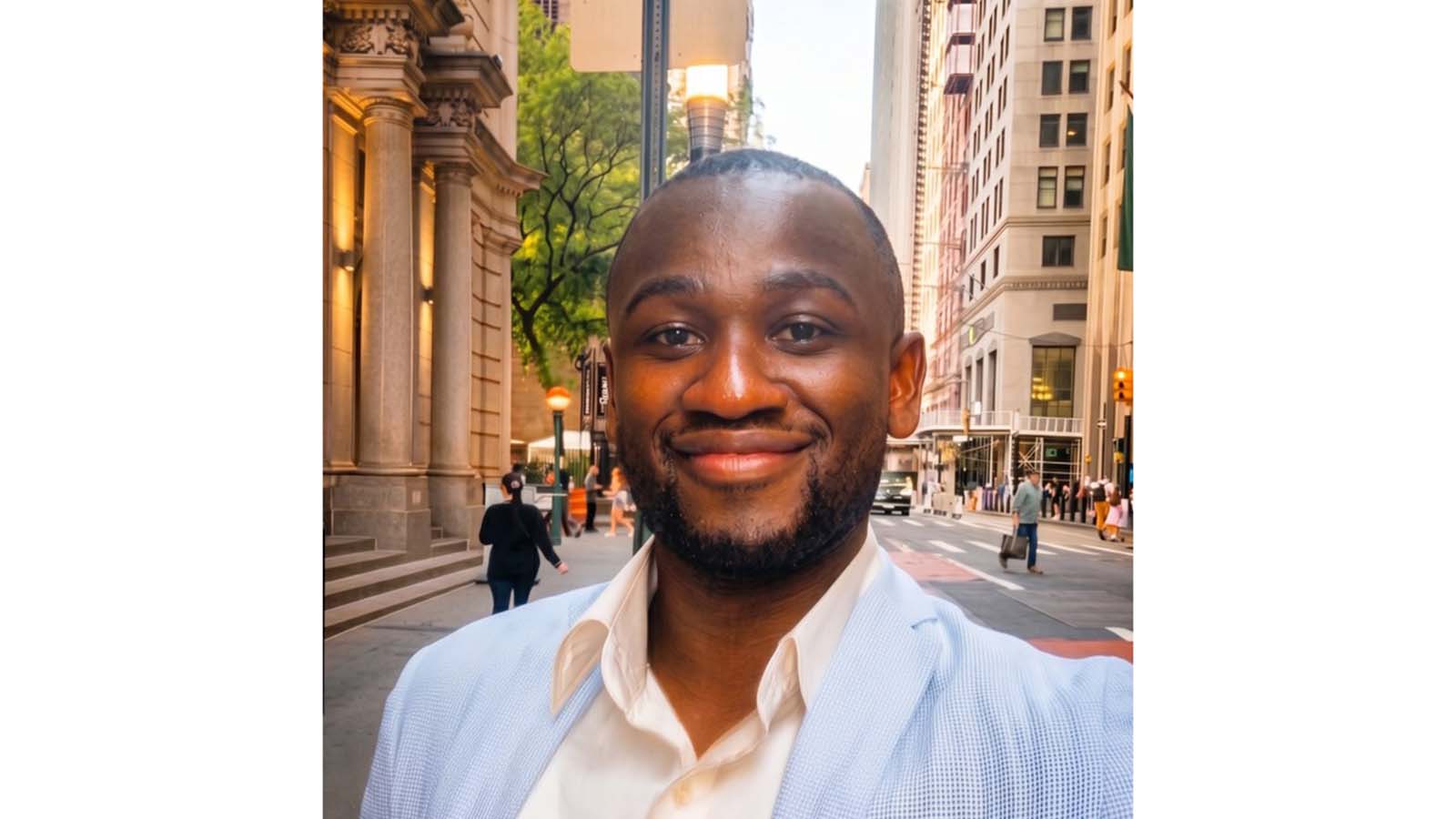
AS artificial intelligence reshapes industries, disrupts traditional business models, and redefines the future of work, organisations worldwide are searching for professionals who can bridge the gap between technology and business strategy.
Among the emerging professionals navigating this transformation is Zimbabwean Chartered Global Management Accountant Charles Makoni, whose journey from Harare to New York reflects a growing recognition that the future of accounting will be shaped as much by technological innovation as by financial expertise.
Makoni’s story mirrors a wider shift taking place across the global accounting profession. What began as academic curiosity during the Covid-19 pandemic has evolved into a career focused on understanding how artificial intelligence can transform accounting, governance and corporate decision-making.
The pandemic proved to be a turning point. As businesses adopted remote working models and digital platforms became essential tools for maintaining operations, Makoni found himself questioning how technological disruption would affect the accounting profession.
“I began to hear rumours about Artificial Intelligence as I was combing through the web, searching where I would go from here,” Makoni recalls.
At the time, he was pursuing an Undergraduate Bachelors Honours Programme at Great Zimbabwe University’s Harare Campus.
While many professionals viewed artificial intelligence as a distant concept, Makoni saw an opportunity to better understand its implications for finance and business.
His undergraduate research focused on artificial intelligence, while his Master’s studies explored automation and the changing role of accountants in an increasingly digital economy.
“I produced two dissertations on accountants in the face of AI and automation,” he says.
The research came at a time when artificial intelligence was still largely absent from mainstream discussions within Zimbabwe’s accounting and business sectors.
However, Makoni believed that business leaders and finance professionals needed to prepare for a technological shift that was already gathering momentum globally. That conviction led to his invitation to speak at the Institute of Chartered Accountants of Zimbabwe in 2023 during a session on emerging technologies.
“At that time, I was completing my Master’s dissertation. It was a totally new concept in my country; the industry was not giving enough attention,” he explains.
“Through further reading, I understood that accountants needed to prepare and brace themselves because Artificial Intelligence would sweep across industry one day. It was time to bring awareness to the industry, unpacking what it was.”
The presentation positioned him among a growing number of professionals advocating for greater awareness of the opportunities and risks associated with emerging technologies. It also highlighted the increasingly important role accountants are expected to play in guiding organisations through digital transformation.
His growing profile subsequently earned him recognition in the local media, providing him platforms to discuss artificial intelligence before a wider African audience.
For Makoni, the discussions extended beyond technology adoption. He viewed artificial intelligence as a policy issue requiring collaboration among governments, investors and academic institutions to ensure that countries remain competitive in a rapidly evolving digital economy.
“I needed governments all over the world to be aware of this as they were making policies,” he says.
“I understood through reading that AI would come with risks, so I wanted them to put in place the policies that would protect citizens.”
His recommendations focused on strengthening digital infrastructure and ensuring broader access to technology.
“There is need for collaboration among the government, the academia and the investors. We need to build our own data centres so that we are not left behind. We also need investment in energy, because as you are aware, Artificial Intelligence consumes a lot of energy. We also need people in the marginalised areas of our country – for example in rural areas – to access the internet.”
Beyond accounting, Makoni has also sought to explore how artificial intelligence could improve operational efficiency in other sectors of the economy. While serving within the pensions industry, he began examining how AI could be integrated into pension administration, member services and governance structures.
His presentation to the Zimbabwe Association of Pension Funds Conference focused on issues ranging from pension processing and member benefit statements to proof-of-life verification for pensioners, data quality, accessibility and governance frameworks.
Recognising that many industry stakeholders would not have attended the conference, he later ensured that the key insights were published in a pension fund monthly publication, broadening the reach of the discussion at a time when digital transformation was becoming an increasingly important business consideration.
His growing influence earned him recognition among the country’s “40 Under 40 Influential Young Business Leaders”, an accolade that acknowledged both his professional achievements and thought leadership in emerging technologies.
The next chapter of his career would take him to one of the world’s leading business centres. Drawn by the globally recognised STEM programme at Fordham University’s Gabelli School of Business in New York, Makoni saw an opportunity to acquire advanced business and technology skills increasingly sought by multinational corporations.
“These skills, you don’t get them anywhere Even the senior executives of every organisation are looking for professionals who are already equipped with this. That is what drew me to New York City.”
His studies have exposed him to advanced analytics and business intelligence tools such as Tableau AI — which is business data analytics and visualisation technology — that is becoming critical as organisations seek to leverage data for faster and more informed decision-making.
The move has also opened doors to international professional networks. Makoni is currently in discussions regarding participation in the Next Generation Committee of the New York Certified Public Accountants (NYCPAs), where he hopes to gain exposure to senior executives and boardroom leaders from Fortune 500 companies.
Looking ahead, he believes the greatest opportunities lie at the intersection of accounting, technology and business process optimisation.
For Makoni, the challenge is not whether artificial intelligence will transform the accounting profession, but how quickly organisations can position themselves to benefit from the change.

