 Staff Writer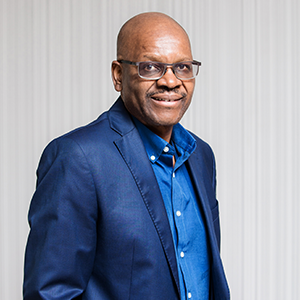
Bothwell P. Nyajeka
ONE of the oldest principles in business is that “high risk should yield high return.” In addition, investment professionals often say, “You cannot take equity risk for money market returns.” Both these principles are based on the premise that every business venture carries risk and that superior returns can only be achieved by accepting an appropriate level of risk.
The principles capture one of the most fundamental responsibilities of every board of directors. A company must ensure that the risks it is taking are commensurate with the returns it expects to generate in the long run. If the risks exceed the expected rewards, shareholder value is destroyed. If the company is excessively cautious, it may miss profitable opportunities.
At its core, business exists because markets are imperfect. Opportunities arise from imperfections in product markets, labour markets, financial markets and service markets. Every successful company is essentially identifying these imperfections and converting them into products and services that yield returns.
However, there is no guarantee that every opportunity will produce the desired outcome. The challenge for boards is therefore to understand the risk the company is taking, in pursuit of returns, and to manage it effectively.
This is where the power of the board risk committee lies. The greatest contribution of a risk committee is that it transforms uncertainty into measurable risk.
Although the words risk and uncertainty are often used interchangeably, they are fundamentally different.
With risk, the possible outcomes are known and probabilities can reasonably be assigned to each outcome. With uncertainty, the possible outcomes themselves are unknown, making meaningful probability estimates impossible. In simple terms, uncertainty is unknown. Risk is measurable.
Business decisions are made on the basis of measurable information. Capital cannot be allocated effectively when directors are simply guessing. Uncertainty paralyses decision making because nobody knows what is likely to happen.
The work of the risk committee is to bring structure to uncertainty and convert it into quantifiable risk.
Through scenario analysis, stress testing, sensitivity analysis, market intelligence, risk registers and quantitative modelling, the committee converts unknowns into measurable risks that the board can understand. The committee does not eliminate uncertainty entirely, but it reduces it sufficiently to enable informed decision making.
Once uncertainty has been translated into measurable risk, the board can allocate capital more effectively, evaluate investment proposals objectively and determine whether expected returns adequately compensate for the risks involved.
The formal board risk committee is, however, a relatively young institution in corporate governance. For many years, governance codes treated risk oversight as merely a sub-function of the audit committee. This remains the position in many Zimbabwean companies, particularly outside the banking, insurance and state-owned enterprise sectors.
From my experience serving on boards, the risk committee has tremendous power.
First, it has the authority to recommend corporate rescue or, where appropriate, the orderly closure of a financially distressed company. This is perhaps one of the committee’s most significant powers. When a company no longer has the capacity to meet its liabilities as they fall due, continuing to trade may expose directors to allegations of reckless trading. Continuing to incur obligations while knowing that the company has no realistic ability to repay creditors may create personal liability for directors.
An effective risk committee provides the board with an independent assessment of financial viability and may recommend corporate rescue proceedings or an orderly wind down before a creditor files for liquidation of the company.
Second, the committee recommends the organisation’s risk appetite. This responsibility has become particularly important in economies characterised by exchange rate volatility, inflationary pressures and rapidly changing regulatory environments such as Zimbabwe.
Every organisation must clearly define how much risk it is willing to accept in pursuit of its objectives. Without an agreed risk appetite, management may unknowingly expose the organisation to risks that shareholders never intended to assume.
Third, the committee establishes early warning systems. One of the biggest weaknesses in many corporate failures is that warning signs were visible long before collapse occurred.
The risk committee should focus on leading indicators rather than waiting for financial statements that merely report what has already happened. By monitoring risk indicators, the committee enables the board to intervene while corrective action is still possible.
The committee’s influence is also strengthened by law and regulation. The Companies and Other Business Entities Act places a duty of care, skill and diligence on directors, requiring them to exercise informed judgement in the best interests of the company. In addition, the Zimbabwe Stock Exchange Listing Requirements require listed companies to maintain effective risk management frameworks to support board oversight.
For regulated financial institutions, the requirements are even more extensive. The Reserve Bank of Zimbabwe and the Insurance and Pensions Commission require dedicated board risk committees responsible for approving risk appetite, overseeing stress testing, monitoring capital adequacy and ensuring that significant risks remain within approved limits. In practice, these committees possess the authority to halt lending programmes, reject new financial products and even block strategic initiatives that exceed the organisation’s approved risk appetite.
Ignoring the risk committee’s recommendations can lead to severe operational, financial, and reputational damage.
Ultimately, the real power of the risk committee lies in giving directors the confidence to make informed decisions by reducing uncertainty to a level where intelligent judgement can be exercised. In today’s increasingly volatile business environment, this is what makes the risk committee one of the most powerful in the boardroom.
l Nyajeka is a business consultant and board advisor. He has vast experience as a corporate executive and has sat on various boards in Zimbabwe, Botswana, South Africa and Uganda. He is currently chairman of ACR Solutions

