
 Staff Writer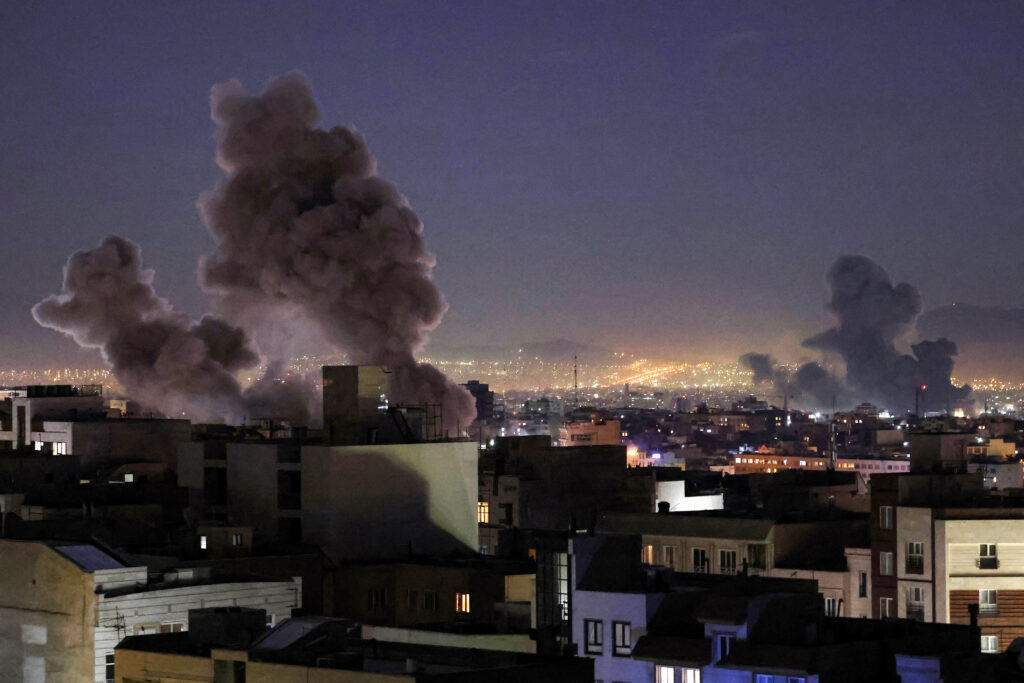
Oil fluctuated after Iran said crude flows were continuing from its main export hub following a US attack on military facilities, and as President Donald Trump raised pressure on nations to help reopen the Strait of Hormuz.
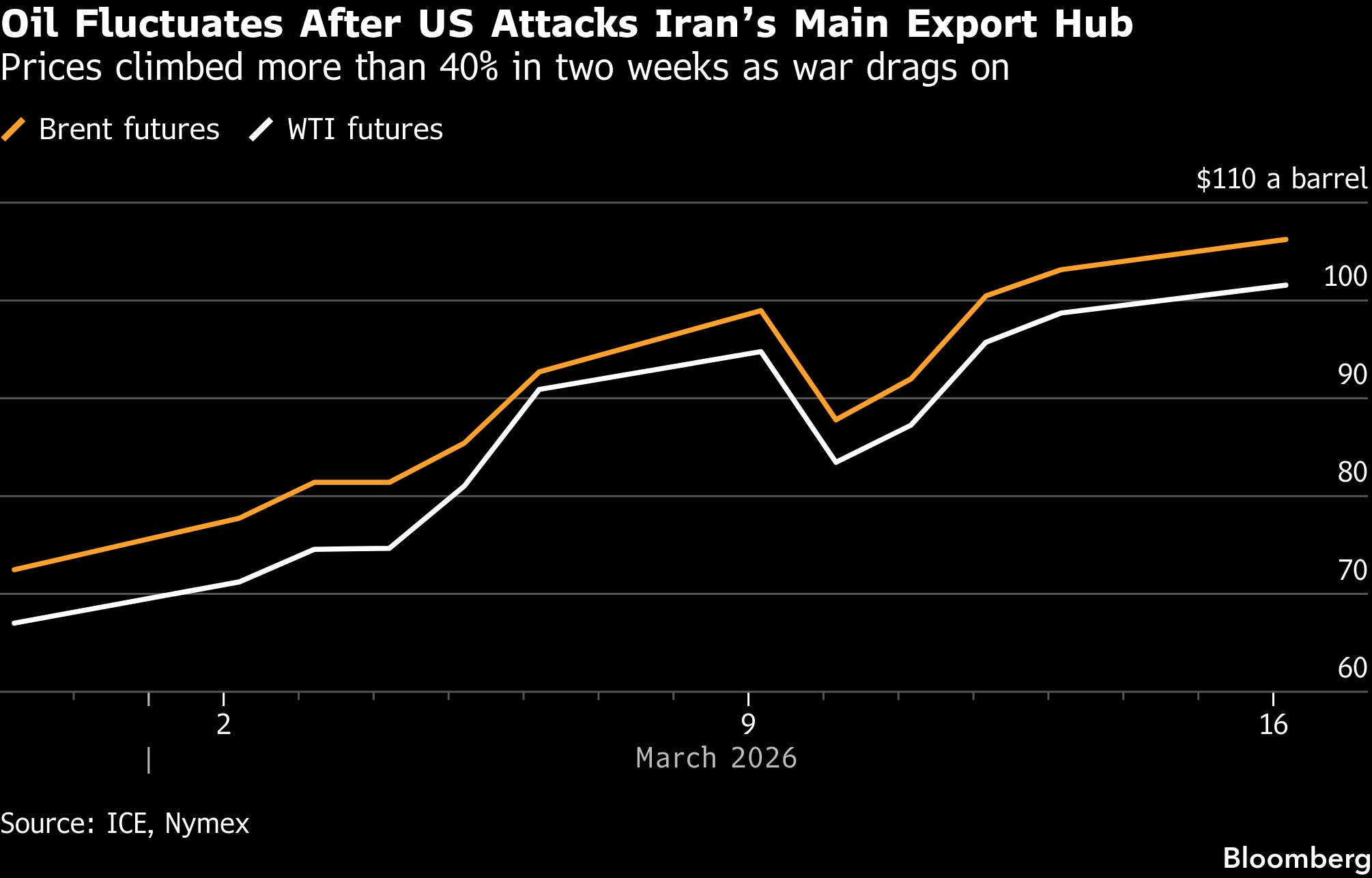
Brent traded around $105 a barrel — after earlier adding as much as 3.3% — while West Texas Intermediate was near $99. Futures had risen more than 40% in the past two weeks.
The Islamic Republic carried out retaliatory attacks on Israel and Arab states after the US struck military sites on Kharg Island, which handles the bulk of Iran’s oil shipments.
Iran’s Fars News Agency reported that exports from the island were continuing as normal. The Iranian army said some specified areas in Doha and Dubai hosting US forces may be attacked, Fars said early on Monday. Dubai International Airport temporarily suspended flights after a drone incident that caused a fire.
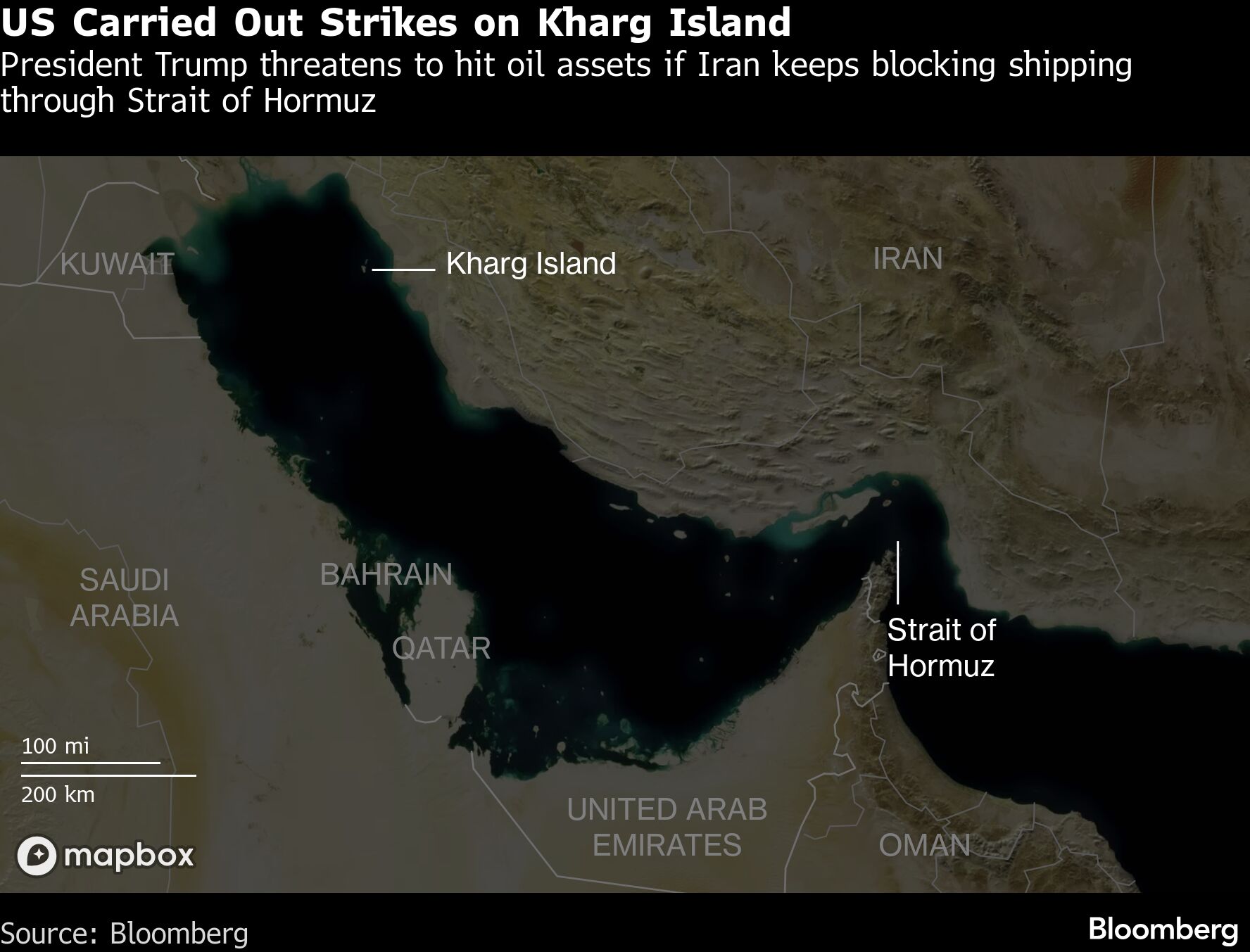
Meanwhile, Trump told reporters on Air Force One that he is “demanding” that other countries contribute to the defense of the Strait of Hormuz, the vital maritime thoroughfare linking the Persian Gulf to international markets.
The bombing of Kharg Island added to the scope of the conflict, which the International Energy Agency last week said has already caused the largest supply disruption in the history of the global oil market. Traffic through the Strait of Hormuz has remained at a near-standstill since fighting began.
“A lot of the geopolitical premium was already priced last week, so traders seem to be waiting for clearer signs of actual supply loss before pushing prices materially higher,” said Haris Khurshid, chief investment officer at Karobaar Capital LP in Chicago. After the attack on Kharg, it “looks like the market is pricing disruption rather than a full supply shock,” he added.
In an interview with the Financial Times, Trump said he could delay his planned summit with Chinese President Xi Jinping if Beijing didn’t help unblock the waterway. He also warned in that interview that NATO would face a “very bad” future if member states failed to help in Hormuz.
When asked if there were any negotiations between the US and Iran, Trump said Washington is talking to Tehran but that he’s not sure if Iranians were “ready.” Oil prices will “come tumbling down” as soon as the war is over, he added. Iranian Foreign Minister Abbas Araghchi said over the weekend that the Islamic Republic hadn’t asked for talks or a ceasefire.
The drawn-out conflict is taking a toll on energy consumers, prompting China’s biggest oil refiner to trim run rates, although officials said Beijing’s robust energy supply can cushion external shocks despite oil price volatility.
In the United Arab Emirates, loading operations at the key hub of Fujairah were interrupted after a drone strike on Saturday, choking off shipments from the country’s only export route while the strait stays blocked. Activities resumed on Sunday.
In a sign of how the war is squeezing global crude supply, the IEA said Sunday that oil from an unprecedented stockpile release will be made available immediately in Asia. The agency’s statement came after it received implementation plans for the record 400-million-barrel reserve release announced last week.
Japan began its release on Monday, while the US is set to roll out the first tranche of its 172‑million‑barrel commitment this week. However, Washington has framed the move as an exchange — essentially a loan that companies must eventually return with interest.
© 2026 Bloomberg

