
 Almot Maqolo, Staff Writer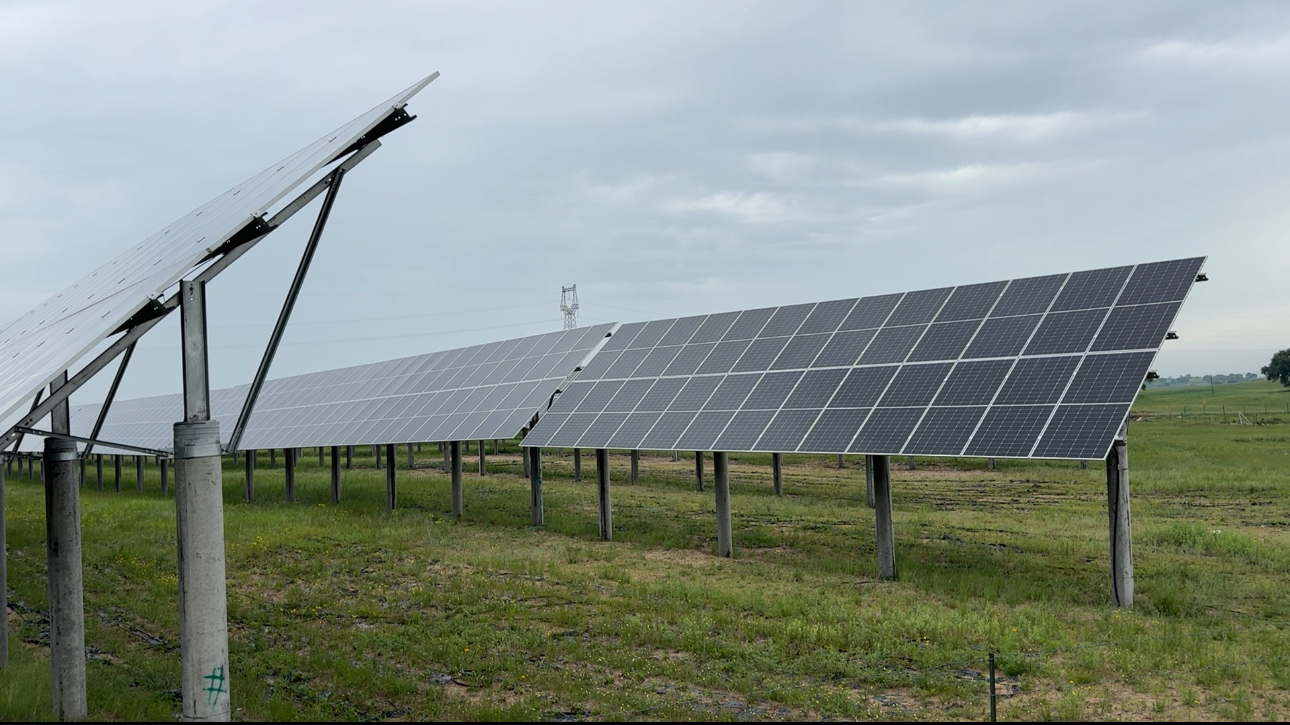
Staff writer in Beijing
ROWS of solar panels stretch across what was once severely desertified grassland in northern China’s Hebei Province, where sheep and cattle now graze beneath the installations, demonstrating how the country’s renewable energy expansion is being combined with ecological restoration.
The Shenyuan Qicaihe Photovoltaic Power Station, operated by Chengde Shenyuan Solar Energy Company, forms part of China’s drive to expand renewable energy while supporting rural communities and protecting the environment.
Before the project was developed, the area was severely affected by desertification. Today, the restored grassland provides grazing for nearly 4 000 cattle and more than 1 400 sheep.
The 300-megawatt solar farm spans 6,6 square kilometres and incorporates energy storage facilities. Livestock graze beneath the solar panels using a rotational grazing system, helping to maintain healthy grassland while sustaining agricultural production.
Production Manager Wang Xiaotian says the project demonstrates that renewable energy and agriculture can successfully coexist, proving that economic growth and environmental protection can go hand in hand.
“The solar panels are installed high enough above the ground to leave plenty of space for livestock to graze underneath. The animals can continue feeding naturally because our equipment does not interfere with their movement or grazing.
“The photovoltaic panels also provide some shade, which helps protect the grass. By reducing direct sunlight, they create better conditions for the vegetation to grow,” Xiaotian told The Financial Gazette recently.
“This creates a complementary system. We generate solar power while farmers continue raising cattle and sheep on the same land. The two activities do not interfere with each other, they support one another.”
Renewable energy is playing an increasingly important role in China’s development, with projects such as the Shenyuan Qicaihe Photovoltaic Power Station demonstrating how clean energy generation can be combined with ecological restoration and sustainable agriculture.
While China’s experience demonstrates how renewable energy can be integrated with agriculture and environmental restoration, Zimbabwe is also expanding its renewable energy sector, although at a much more modest pace.
According to the International Renewable Energy Agency’s (IRENA) Renewable Energy Statistics 2026 report, Zimbabwe’s total renewable energy capacity increased from 878 megawatts (MW) in 2016 to 1,285 MW in 2025, representing a 46 percent expansion over the decade.
Hydropower continues to dominate Zimbabwe’s renewable energy mix, accounting for nearly 84 percent of total renewable capacity.
Capacity in this sector grew from 776 MW in 2016 to 1 080 MW in 2025, according to the IRENA data.
The solar energy segment, while still relatively small, has recorded the fastest growth. Solar capacity expanded from just 2 MW in 2016 to 105 MW in 2025, representing a 5 150 percent increase over the decade. Growth accelerated notably after 2021, when installed capacity stood at 27 MW.
Bioenergy and wind energy have seen little development, according to the IRENA report. Bioenergy capacity remained unchanged at 100 MW throughout the period, while wind energy projects remain largely absent from the official statistics.
Electricity generation data also reveals significant fluctuations. Renewable electricity production ranged from 6,470 gigawatt-hours (GWh) in 2016 to a peak of 9,766 GWh in 2024.
Output declined to 6,480 GWh in 2020, illustrating the vulnerability of electricity generation to changing hydrological conditions because of the country’s heavy reliance on hydropower.
By comparison, IRENA data shows Zambia expanded its renewable energy capacity from 2,432 MW to 3,541 MW over the same period, while South Africa’s renewable energy capacity nearly quadrupled from 4,379 MW to more than 16,500 MW.
The figures suggest Zimbabwe is making gradual progress in expanding renewable energy capacity, with recent growth in solar power indicating increasing investment in the sector.
However, hydropower continues to dominate the country’s renewable energy mix, highlighting the potential for further diversification as Zimbabwe seeks to strengthen its energy security.

