
 Staff Writer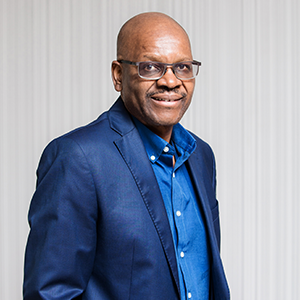
Bothwell P. Nyajeka
In my last column, When the Board Can Say No to Shareholders, I argued that directors not only have the power to say no to shareholders, but that their fiduciary duties sometimes require it. Directors owe their duties to the company, and the law protects them when, acting properly and in good faith, they exercise independent judgment rather than simply implementing a shareholder’s wishes.
After that article was published, a reader sent me a comment that made me think about the issue differently:
“Independence is easy to defend as a principle but becomes meaningful only when a director can question a shareholder, a chair or management without the governance system itself becoming defensive.”
I have thought about that observation, and I believe the reader is right. The more difficult question is not whether a director can say no, the law can answer that. The relevant question is whether the governance environment around that director genuinely allows him or her to say no.
A company can have an impeccable board charter. It can have carefully drafted terms of reference for every committee. It can have the correct balance of executive and non-executive directors, and a legal opinion confirming that every director has the right, sometimes the duty, to exercise independent judgment. And yet that entire framework can fail at precisely the moment a director actually exercises that independence.
Researchers who study boardroom and organisational dynamics describe part of this problem as psychological safety: whether a director can raise a difficult question or express an unpopular view without an unreasonable interpersonal or organisational penalty for doing so.
A director considering whether to challenge a powerful shareholder is making more than a legal calculation. The choice is also a human one: if I say this, what happens to me afterwards?
Where directors have seen colleagues marginalised for raising concerns, or where disagreement with a shareholder is treated as disloyalty, directors learn very quickly how the system really works. They begin weighing the personal consequences of speaking out versus staying silent.
This is particularly relevant in Zimbabwe, where investigations into a number of corporate failures have pointed to the same pattern: directors and members of management remained silent despite being aware, well before the company collapsed, that serious problems were developing. In each case, something had taught people inside the organisation that certain subjects were not welcome, certain individuals could not be challenged, or certain shareholder preferences were effectively beyond discussion.
In my view, the person with the greatest influence over whether psychological safety exists in the boardroom is the Chair. The Chair can create or destroy the conditions for independent thinking, and from my own experience chairing boards, I have learnt that this can happen very quickly.
A single dismissive response from the Chair is enough. A director may raise a genuine concern and the Chair brushes it aside, with an interruption, or perhaps simply, “we have already dealt with that,” before moving straight to the next agenda item. It may look insignificant but everyone around the table has just learnt what happens to difficult questions. This is a lesson more powerful than 20 pages in a board charter declaring the organisation’s commitment to openness. The true test of a Chair’s commitment to independence is how the Chair behaves the moment someone says, “I disagree.”
Over the years, I have found three practices particularly useful.
First, disagreement must be recorded properly in the board minutes. Minutes should not read as though every important decision was unanimous when it was not. Where a director raises a material objection, particularly on fiduciary, legal or procedural grounds, the minutes should record the substance of the concern and the reasoning behind the eventual decision – framed not as Director A versus Director B, but as a governance issue: the concern raised, its basis, the discussion that followed and the decision reached. This protects the director, and it also protects the board. Years later, if the decision is scrutinised, there is a record showing that competing considerations were weighed and the decision was reached after genuine deliberation, in good faith. This is also where an excellent company secretary earns their keep. Minute taking is a professional skill, not a clerical one.
Second, the Chair should give someone on the board explicit responsibility for protecting minority views. On many boards, the lead independent non-executive director is usually given this job. That person watches not only whether directors are technically permitted to speak, but whether minority perspectives are actually heard and properly considered. Sometimes the Chair is too close to the issue, or even part of the disagreement; an independent director who can recognise a legitimate minority view being crowded out is an important safeguard.
Third, boardrooms should institutionalise disagreement before important decisions. On contested matters, I have found it useful for the Chair to ask someone to argue the strongest case against the board’s preferred course before a vote is taken. The person need not believe it themselves. The purpose is to force the board to confront the best version of the opposing argument. This changes the character of dissent: instead of being read as the mark of a “difficult” director, challenging becomes part of how the board decides.
My reader’s comment forced me to qualify the argument I made in my last column. A board’s independence is not measured by what its charter says about dissent, or even by what the law permits. It is measured by what actually happens, in that room, to the director who dissents. That is a test the Board Chair sets every single time.
l Nyajeka is a Business Consultant and Board Advisor. He has vast experience as a corporate executive and has sat on various boards in Zimbabwe, Botswana, South Africa and Uganda. He is currently chairman of ACR Solutions and is also a seasoned trainer and facilitator for the Institute of Directors Zimbabwe (IoDZ). For business consulting, board advisory and executive coaching services Email him on: bnyajeka@acr4solutions. com

