
 Staff Writer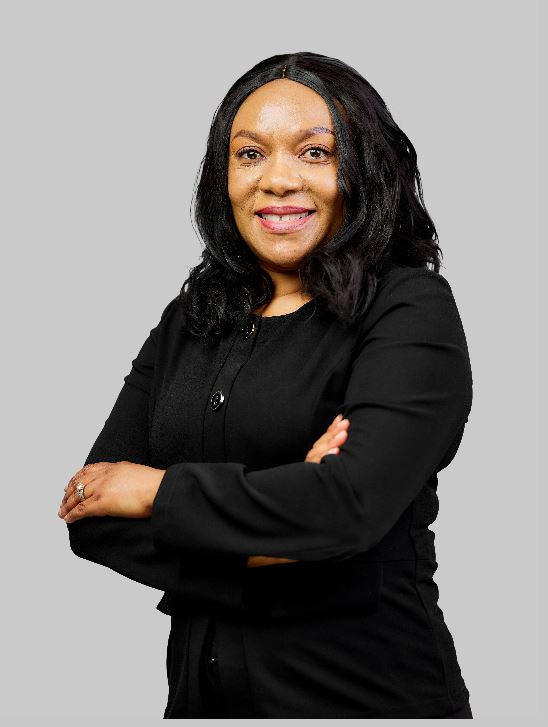
Qelani Makina
PRIVATE banking and wealth management has traditionally been viewed as a male-dominated genre within the world of financial services.
This is from both the perspectives of client profiling as well as relationship and wealth management service delivery. Global trends reflect that an increasing number of women are not only taking up leadership roles as wealth managers, but that the bouquet of services and solutions offered by banks are evolving to meet the unique financial needs of women investors.
This trend signals an evident evolution of social and economic trends around the world that are allowing more women to generate, access and preserve wealth. Rising entrepreneurship and greater financial independence amongst women are undoubtedly on the upward trajectory, hence driving the need for banks to look more closely at reshaping their solutioning and engagement strategies to align with women investors.
Breaking barriers: Women as wealth managers
There is growing representation of female professionals in private banking and wealth management. This has ushered in a new generation of female wealth managers and leaders. A case in point is the recent appointment of Ida Liu as CEO of HSBC Private Bank in January 2026, following her role as global head of Citi Private Bank, thus transcending boundaries previously dictated by stereotypes.
In a March 2026 article by BlackRock, studies have shown that women wealth managers have unique characteristics that change the pulse when it comes to wealth management. It reveals that women often bring with them a holistic approach to wealth management, prioritising intergenerational stability and family-focused planning.
Women tend to have a unique acumen to nurture and deepen relationships as well as invest more time with their clients, understanding their needs and aspirations. Such attributes contribute immensely to building the much-required trust that this industry demands.
As such, research has shown that diverse leadership teams enhance profitability and innovation in private banking and wealth management. Studies from institutions like the University of California, Berkeley, and Warwick Business School have shown that, on average, women outperform men as investors. In a 2020 International Finance Corporation and World Bank study, it was suggested that gender-balanced private equity management teams can achieve 20 percent higher returns than male dominated ones.
Bespoke banking: Why finance must fit the woman
There are aspects of a woman’s life journey that are significantly different from that of their male counterparts. From a financial perspective, women on average experience more career breaks, wage gaps and slower progression up the corporate ladder, and longer life expectancy. Numerous studies by the United Nations (UN) and World Health Organisation (WHO) confirm this notion.
Although many nations are taking steps towards solutioning for some of these gaps, the disparities remain apparent. According to a study by WHO and the UN, global average life expectancy is consistently higher for women than for men. On average women live 4,4 to five years longer than men. All these factors subsequently contribute to defining specific needs for specific segments of clientele.
Another factor that necessitates female centric solutioning, is that on average women prefer balanced, risk-conscious investment strategies, unlike their male counterparts who tend to be more risk tolerant. A 2017 article by E Venter in the South African Journal of Economic Management and Sciences describes women investors as more risk-averse, goal-oriented, and disciplined investors. They have a greater preference for longer term more or socially responsible investments over what can be termed as frequent trading.
With respect to matters of inheritance and wealth transfer trends, it is evident that over time women have been increasingly set to inherit and control a rising share of global wealth. This again reflects changes in social, cultural and economic dynamics playing out across the globe. This points to the need for significant consideration for wealth managers to pivot advisory services specific to women’s needs.
Lastly, lifestyle considerations reflecting the interests of women such as healthcare, education, child-care and philanthropy play a significant role in their investment decisions, and, as such, in product design decisions for financial services providers.
All the above factors are what subsequently drive the need to incorporate and develop solutions that resonate with women. As such, examples would be customised portfolios that are ESG focused; retirement and longevity planning that incorporate strategies for longer life span and health cost considerations; entrepreneurial solutions for women-led business such as tailored credit access; family and succession planning that is designed for intergenerational wealth preservation.
The private banking and wealth management DNA is fundamentally changing as the female demographic becomes more apparent as a bankable segment. The emergence of women wealth managers, investors and the specialised service models that are catering for women clients should not only be seen as a diversification but as a significant strategic alignment to a global shift in financial services delivery.
It therefore goes without saying that banks that embrace this demographic shift stand to transform themselves from standard wealth managers to future-relevant financial services providers. Not only will they contribute to the empowerment of the growing segment of female economic contributors but position themselves for significant secure long-term growth.
Makina is head of Private Banking, Stanbic Bank Zimbabwe

