
 Staff Writer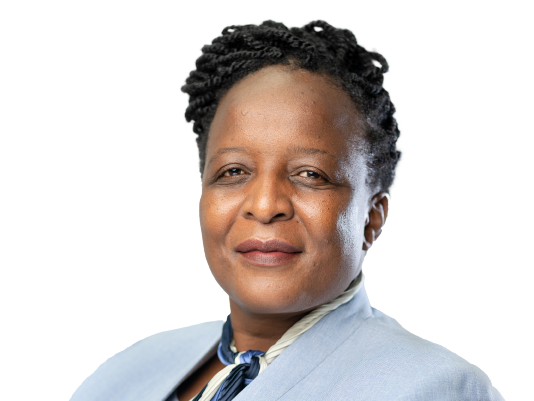
By Betty Murambadoro
ORGANISATIONS, similar to families, evolve with time as new entrants join and other long-serving members transition, age or exit for various reasons.
Likewise, the dynamics prevalent within tend to also shift depending on who is now calling the shots in a particular episode of the family or organisation. However, these shifts in dynamics and influence may or may not be in your favour.
I often hear others mourn over how the quality of their relationships deteriorated following the death, transition or exit of their key contact in the family or organisation. Remember how there came a new king who did not know Joseph, and the biblical Israelites transitioned into a lengthy tormenting era, contrary to the peace they had enjoyed during the years when Joseph was in charge.

Such is the case sometimes when a key family member passes on, and the relations with the surviving members are not as strong. What worked for you in a particular era during the “reign” of certain individuals may not necessarily work for you in the same way. I have observed how when these shifts happen, we face the battle of forging new relationships with those we had overlooked, ignored or bypassed over the years.
Perhaps they were overlooked erroneously, or we underestimated their influence, or simply they were just not our key contacts because of the nature of our work. Pause and reflect on how intentionally and proactively fostering multiple relationships across can minimise potential adverse impact in the event of personnel changes in an organisation.
In the marketplace, multiple stakeholder management is key in sustainable relationships. You just don’t know where wheels can potentially come off. Each stakeholder has some level of influence in how the relationship goes. Stakeholder mapping should be the very starting point in establishing relationships in families or organisations.
It was so hilarious for me, coming from a relatively small family and marrying into a “conglomerate” of a clan, facing my worst nightmare in stakeholder mapping. Almost all those I was introduced to during courtship seemingly commanded such scary authority.
It was only years later that I discovered that after all some of them were not really the kingpins in how the clan’s politics happened. Nonetheless, it was a great lesson for me in understanding the significance of multidirectional relationships.
As the family evolved, I was able to position, reposition, learn and unlearn how to navigate the shifting dynamics. Similarly, in the marketplace, I am eager to always know who the key stakeholders are and what interests they represent in how I deliver my service.
Without messing protocol, it is necessary to find a way to establish rapport across organisational hierarchies. Multi-directional relationship management means developing rapport “upwards”, specifically, the shareholder, the line manager and the board. Then rapport “sideways”, with your peers at the same level as you, even in other divisions.
“Downwards” rapport involves your direct reports, right down to the supporting teams in the business. At the business partner level, it’s not enough to just develop rapport with that one key contact in that business.
Businesses have committees, policy-makers, executives and shareholders who may potentially speak for or against you in situations. I recall a marketplace story of an incoming executive who knew so well how the hiring manager was desperate to cut costs. To impress the hiring boss, this incoming executive was very quick to discontinue certain discretionary privileges which the lower-level staff had been enjoying for years.
So rightly his bold stance was received positively in his “upward” relationships who wanted costs cut. And of course, he won favour “sideways” with his peers who were not comfortable with cutting costs in their own divisions.
However, his relationships “downwards” took a heavy knock. He immediately started facing passive resistance and some form of sabotage in the other initiatives he was pursuing. Inevitably, he did not last in the role. At some stage in my career, I had the privilege of studying a project finance module.
Stakeholder mapping is a key requirement in case studies of projects. I assessed several projects, which were a flop or resounding success simply on account of how multiple stakeholders were managed.
Similar experiences prevail in family dynamics. Gaining buy-in across the family line or bloodline is sometimes such a mammoth task. The key is in mastering the art of knowing who the “kingpins” and “live-wire personalities” are upwards, sideways and downwards, then proactively managing them.
In my current role, I have understood how influential some executive assistants are, especially when it comes to securing an audience with the decision makers. Executive assistants control the diaries. They determine which meetings should happen and when. Ignore these assistants at your own peril.
While they may be grades lower in the hierarchy, they wield so much influence in controlling the very offices you want to access. I draw the following learnings from all this:
1. It takes humility to respect everyone regardless of rank. Some individuals access privileged conversations, as they run business errands alongside the bosses. Given a chance, can they speak well of you to these bosses?
2. Be ready to strike up a conversation with anyone whenever an opportunity is presented. You just don’t know how valuable that connection can be in future.
3. Value both formal and informal power. Formal power resides within the hierarchy, specifically in those wielding positional power. But informally, there could be privileged individuals who may be in lower ranks. These can create havoc or cause positive vibes in your favour. Know who they are and ethically manage them.
4. Be intentional in regular stakeholder mapping. Identify incoming parties with direct and indirect interests in your service discharge, then build rapport via service excellence. I wish us a productive year as we pursue multi-directional relationships in our interactions.
Murambadoro is the Stanbic Bank Zimbabwe Executive Director, Corporate and Investment Banking.

