
 Staff Writer
By Ntando Thukwana and Bonolo Mokonoto, Bloomberg
South Africa’s economy expanded slightly more than expected in the first quarter despite early headwinds from the Iran war, but the numbers masked underlying weakness in domestic demand.
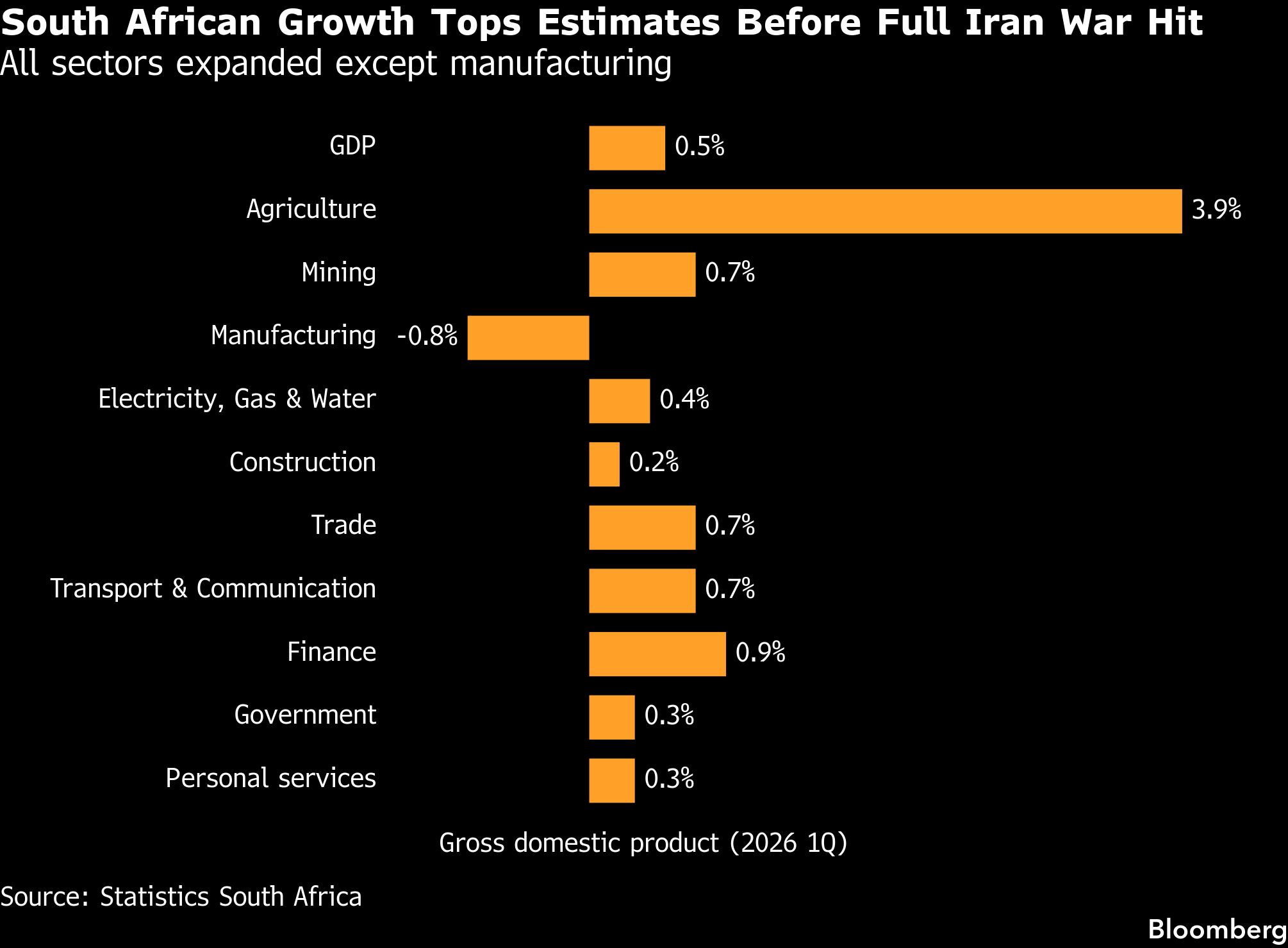
Gross domestic product grew 0.5% in the three months through March, compared with 0.4% in the prior quarter, Statistics South Africa said in a report released in the capital, Pretoria, on Tuesday. That beat the 0.3% median estimate of 15 economists in a Bloomberg survey.
On a year-over-year basis, output rose 1.9% in the first quarter compared with 0.8% in the previous three months. Economists in the survey had predicted 1.7% growth.
David Omojomolo, Africa Economist at Capital Economics, acknowledged the numbers were better than expected, “but there were signs of weakness under the hood, which will make the Reserve Bank cautious about delivering aggressive interest rate hikes,” he wrote in a client note.
The central bank last month downgraded its 2026 growth forecast to 1.2% from 1.4% and delivered its first interest-rate increase in three years to contain inflation, cautioning that an extended Middle East conflict may warrant further tightening.
Fuel and fertiliser prices have surged since the war began on February 28, effectively closing the Strait of Hormuz, a key passageway for a fifth of the world’s seaborne oil and liquefied natural gas.
South Africa is a net importer of oil, and the conflict has pushed gasoline prices to a record, denting household incomes and clouding an economic outlook that had begun to brighten after more than a decade of underperformance.
“The evidence is already starting to push through, but let’s keep in mind that this release is only up to March, and the conflict started very late in February,” Joe de Beer, deputy director-general at Stats SA, told reporters. “We can expect to see severe cost pressures on the agriculture industry.”
Nine of South Africa’s industries reported positive growth in the first quarter of 2026. The largest contribution came from the finance sector which grew 0.9% and added 0.2% percentage point to growth.
The manufacturing sector was the only industry to make a negative contribution, decreasing by 0.8% and subtracting 0.1% percentage point from growth.
Household spending
Household expenditure slowed markedly to 0.1% in the first quarter from 1.2% in the previous three months, the lowest growth rate in eight quarters, held back by slowing spending on discretionary items including restaurants, hotels and alcohol.
Fixed investment decreased by 1.1%, subtracting 0.2 percentage point from total growth in the first quarter compared with the fourth quarter of 2025, with negative contributions from activities including machinery and equipment, and residential buildings.
Net exports were a tailwind, contributing 0.9 percentage point to GDP expenditure after imports shrank by 2.6% amid declines in trade in pearls, gems and precious metals, as well as machinery and electrical equipment and textiles.
© 2026 Bloomberg

