
 Staff Writer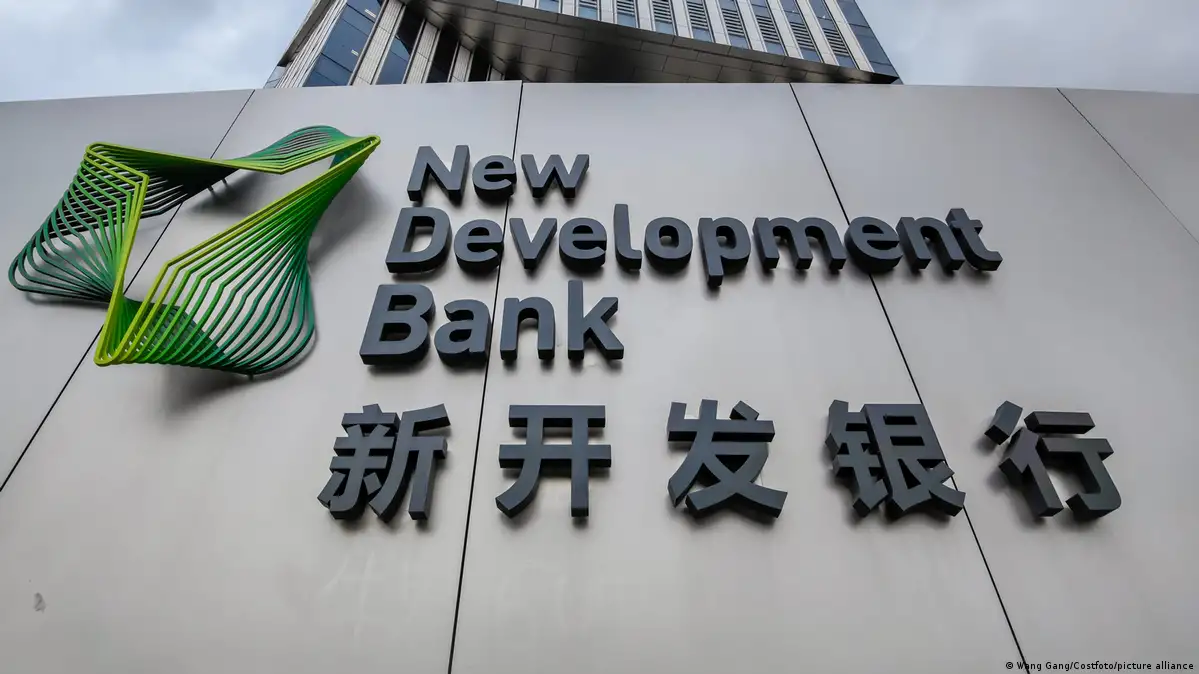
Kudakwashe Taimo
ZIMBABWE’s potential accession to the New Development Bank (BRICS Bank) is strategically important, but the country’s ability to fully benefit from membership will ultimately depend less on access to capital itself and more on domestic reform credibility and execution capacity.
The first priority should be macroeconomic and policy stability. Multilateral lenders, including the New Development Bank, still assess sovereign risk through the lens of fiscal discipline, exchange rate credibility, debt sustainability, and institutional reliability.
Zimbabwe, therefore, needs to continue strengthening fiscal consolidation efforts, maintaining relative exchange rate stability, and improving monetary policy consistency. The ongoing IMF Staff Monitored Program is particularly important because it serves as a signalling mechanism to external creditors and investors that Zimbabwe is attempting to normalise policy frameworks and rebuild international confidence.

Secondly, debt resolution remains central. Zimbabwe’s external debt burden of roughly US$11,7 billion, with approximately US$7,7 billion sitting in arrears to institutions such as the Paris Club, the World Bank, and the African Development Bank, continues to materially constrain access to concessional financing and broader global capital markets.
While New Development Bank membership may diversify funding avenues, sustainable capital access still requires a credible arrears clearance and debt restructuring pathway.
Thirdly, Zimbabwe must prioritise governance and institutional reforms around public investment management. Capital is only productive if deployed efficiently. Strengthening procurement systems, project monitoring frameworks, regulatory consistency, and transparency mechanisms will be essential to improving lender confidence and ensuring infrastructure investments generate measurable economic returns.
One of the major constraints facing many African economies is not necessarily access to development finance institutions, but the inability to convert financing relationships into bankable, executable projects. Zimbabwe will need to address this issue urgently if it is to meaningfully utilise potential New Development Bank funding.
The country’s biggest bottleneck is project preparation capacity. Many infrastructure proposals across Africa fail to reach the disbursement stage because projects are inadequately structured, commercially weak, poorly documented, or lack feasibility studies that meet international financing standards.
Zimbabwe needs stronger institutional capability in areas such as financial modelling, procurement structuring, environmental and social compliance, legal documentation, and project risk assessment.
There is also a coordination challenge. Infrastructure delivery often becomes fragmented across ministries, state entities, and local authorities, which slows implementation and weakens accountability. Zimbabwe would benefit from establishing a centralised, technically skilled infrastructure and project preparation unit capable of developing a pipeline of investment-ready projects aligned with lender requirements.
Equally important is improving execution credibility. Development financiers assess not only project viability but also implementation risk. Delays, policy reversals, foreign currency convertibility concerns, and contractual uncertainty increase lender caution and slow capital deployment. Zimbabwe, therefore, needs to improve policy consistency and investor protections to strengthen confidence around project execution and repayment sustainability.
The focus should ideally be on economically catalytic sectors where developmental and foreign currency generation effects are strongest, energy, transport logistics, water infrastructure, export-linked industrialisation, and digital infrastructure. Projects with measurable productivity gains and hard currency earning potential are generally more attractive from a development finance perspective.
Zimbabwe should avoid framing engagement with the BRICS-led New Development Bank as a geopolitical shift away from traditional global financial systems. Structuring it that way risks creating unnecessary polarisation and could complicate ongoing re-engagement efforts with Western creditors and multilaterals.
Instead, the relationship should be positioned as a diversification and complementary financing strategy. The reality is that Zimbabwe’s developmental financing needs are substantial, and no single funding bloc is likely to adequately meet them in isolation.
The New Development Bank can therefore serve as an additional source of long-term infrastructure financing while Zimbabwe simultaneously continues arrears clearance discussions, IMF engagement, and broader international re-engagement efforts.
Importantly, successful participation in the New Development Bank could actually improve Zimbabwe’s broader global integration if managed properly. Effective utilisation of New Development Bank-funded projects, combined with improved governance, stronger project execution, and macroeconomic stabilisation, could help rebuild international credibility over time. That in turn may gradually improve relationships with traditional lenders and private capital markets.
Ultimately, the objective should not be choosing between BRICS institutions and the traditional global finance architecture. The objective should be restoring Zimbabwe’s credibility across all financing platforms. Countries that attract sustainable long-term capital are typically those that maintain policy predictability, institutional credibility, and disciplined economic management regardless of the funding source.
Taimo is an investment analyst. He is an active member of the Investment Professionals of Zimbabwe community, pursuing the Chartered Financial Analyst charter designation.

