
 Staff Writer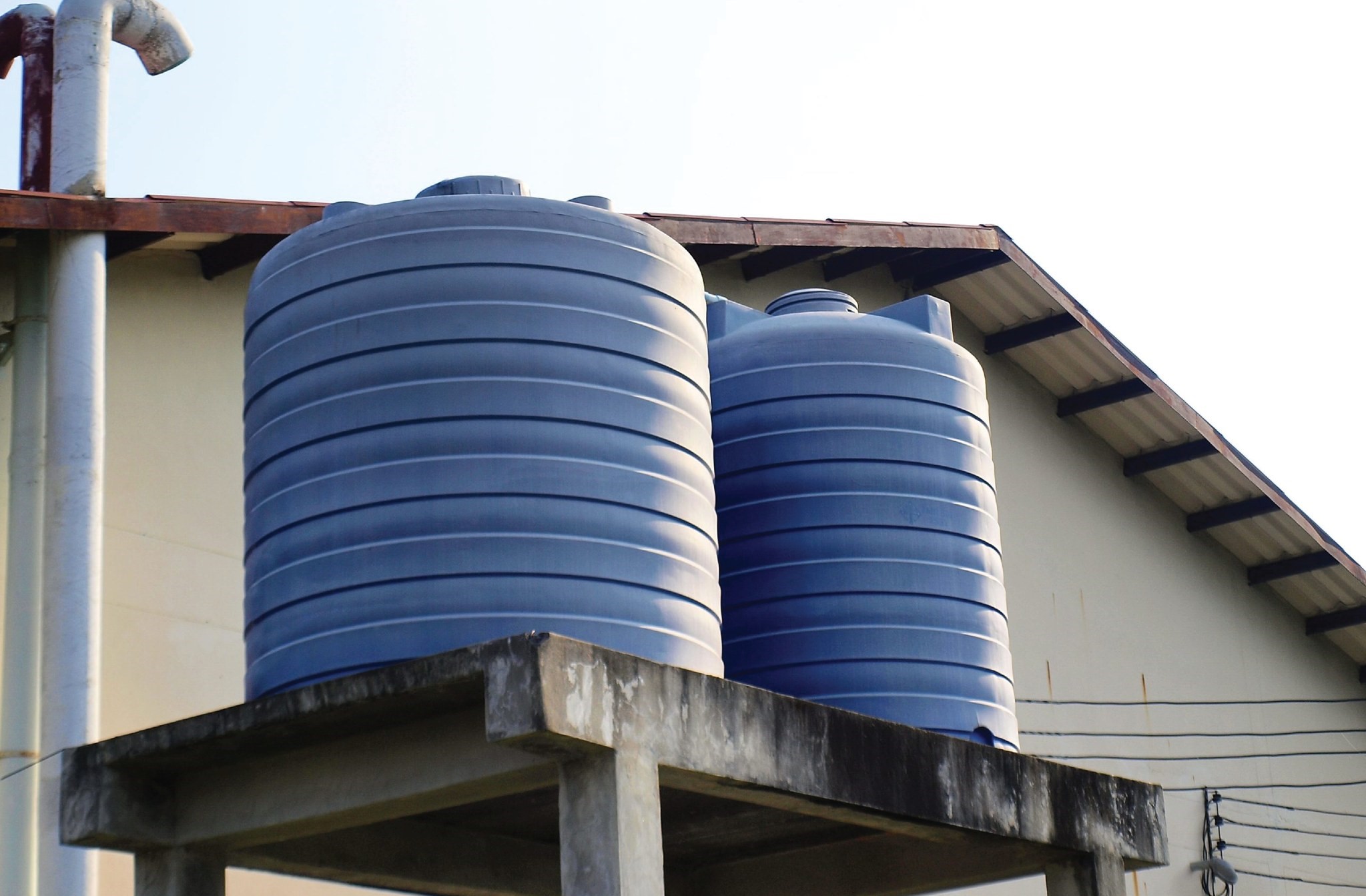
NOUDAM Tanks is emerging as a practical case study in Zimbabwe’s light manufacturing and agri-infrastructure investment landscape, following the establishment and expansion of its water storage and distribution equipment manufacturing operations in Harare.
The company’s growth reflects rising private-sector participation in production-oriented investment that directly supports agriculture, construction, and household water resilience sectors that sit at the base of economic productivity.
Operating from its Msasa industrial base, Noudam Tanks manufactures and supplies durable water storage tanks and compatible piping systems designed for domestic, commercial, and agricultural use. Its investment has focused on fabrication capacity, moulding systems, distribution infrastructure, and technical product adaptation for local operating conditions. The business is positioning itself not merely as a product supplier, but as a water and farm-support solutions provider within Zimbabwe’s broader value-addition agenda.
The investment comes at a time when water security and climate variability are increasingly shaping capital allocation decisions across emerging markets. Storage infrastructure is becoming a critical buffer asset, enabling agricultural production continuity, supporting construction activity, and stabilising household supply. In this context, localised manufacturing of water systems reduces import dependence while improving availability and after-sales support.
From an industrial policy perspective, this type of investment aligns with Zimbabwe’s value-addition and import-substitution thrust, where domestic production capacity is built around essential infrastructure goods.
Noudam Tanks’ market entry strategy has been anchored on direct production rather than pure distribution. By establishing local fabrication capability, the company has been able to tailor product specifications to Zimbabwean usage patterns, including tank durability requirements, fitting compatibility, and cost thresholds relevant to both smallholder and commercial users.
Its product portfolio includes multiple tank sizes and integrated distribution components, allowing customers to procure complete storage and delivery systems rather than standalone units. This bundled approach improves customer retention while expanding average transaction value.
Operationally, the firm has focused on steady capacity build-up rather than rapid over-extension, prioritising product reliability, fulfilment consistency, and service responsiveness. This disciplined scaling model reduces operational risk and supports brand credibility in a quality-sensitive market segment.
The company’s expansion strategy is closely tied to agriculture, which remains one of Zimbabwe’s most interconnected economic sectors. Water storage capacity directly influences farm productivity, irrigation stability, and climate resilience. By strengthening access to storage and delivery systems, the business inserts itself into an upstream productivity chain with downstream multiplier effects.
Noudam Tanks is preparing to introduce greenhouse fabrication systems as part of its next growth phase. This planned product line will extend the company’s footprint from water infrastructure to support for controlled-environment agriculture. Greenhouse systems improve yield predictability, reduce exposure to weather risk, and enable higher-value crop production, strengthening farm economics and export potential.
The move signals vertical adjacency expansion, leveraging existing fabrication and materials expertise to enter a related, higher-value agri-technology segment.
Project establishment has taken place within Zimbabwe’s formal investment licensing framework, with the company obtaining the required investor approvals and operating permissions. Engagement with investment facilitation structures has provided regulatory clarity and compliance guidance, contributing to operational legitimacy and investor confidence.
The investor notes that the ZIDA licensing process provided a structured and transparent entry pathway, offering clarity on regulatory requirements and enabling the business to proceed with implementation plans with greater confidence. Formal registration also strengthens market trust by signalling that the enterprise meets national investment standards.
Based on the company’s experience, ZIDA’s oversight role is considered essential for maintaining investment integrity and filtering out non-compliant or misrepresented projects. Investor engagement processes, including interface meetings and site visits, are regarded as contributing to accountability and operational transparency, particularly for businesses operating in infrastructure-related sectors.
From the investor’s perspective, a predictable facilitation framework reduces administrative uncertainty and enhances execution confidence for production-oriented investors establishing and expanding operations in Zimbabwe.
Beyond capital deployment, Noudam’s operating model has generated measurable employment and skills development outcomes. The company follows a character-first recruitment philosophy, placing greater weight on work ethic, integrity, and trainability than on formal CV credentials alone. This has enabled entry into the formal sector for first-time formal-sector workers and career switchers.
Internal capability building is delivered through mentorship, role rotation, and progressive responsibility allocation. Staff members are trained directly within operational workflows, thereby accelerating the acquisition of practical competence. In several cases, employees have progressed from customer-facing or entry-level roles into supervisory and management positions.
Workplace practices include predictable salary payment cycles, structured advance support for employee emergencies, and responsibility-based performance development. These factors contribute to workforce stability and low internal conflict incidence, reducing hidden operational costs associated with high turnover and labour disputes.
From a development lens, such firms function as micro-institutions of vocational formation, transferring commercial and technical skills into the broader labour market over time.
Noudam Tanks competes on a blended value proposition of durability, affordability, and accessibility. Local production shortens delivery timelines and enables customer-specific adjustments. After-sales responsiveness, often a weakness in import-dependent supply chains, becomes a competitive differentiator when production is domestic.
The company also benefits from community-embedded market presence. Relationship-driven customer acquisition, common in Zimbabwe’s SME ecosystem, strengthens repeat business and referral growth. This reduces customer acquisition cost relative to purely advertising-driven models.
In emerging industrial markets, trust and service reliability often carry equal weight to price — particularly for infrastructure goods with long usage cycles.
Growth planning is structured around measured geographic and product expansion rather than rapid footprint proliferation. The company is evaluating rollout into additional towns through distributor partnerships and project-based supply arrangements, supported by incremental production scaling.
The greenhouse fabrication line represents the most significant medium-term diversification step, broadening revenue streams while maintaining sector coherence. This adjacency strategy lowers execution risk compared to unrelated diversification.
Capital deployment remains closely tied to productive assets, tooling, fabrication systems, and distribution capability, reinforcing a production-first investment thesis.
As Zimbabwe continues to prioritise value addition, productivity infrastructure, and domestic industrial capability, investments in water systems, agri-support technologies, and fabrication capacity represent strategically aligned capital.
In that context, Noudam illustrates how grounded, sector-linked manufacturing investment can translate into commercial viability and development relevance, reinforcing the case for sustained attention to production-oriented investors within the national growth narrative.

